


Harrier: The Energetic and Friendly Scent Hound
The Harrier is a medium-sized scent hound known for its athletic build, friendly temperament, and strong hunting instincts. Originally developed in England for hunting hares in packs, the Harrier combines endurance and determination with a cheerful and social personality that makes it both an effective hunting companion and an affectionate family dog. These energetic and intelligent dogs thrive with active owners who can provide regular exercise, mental stimulation, and opportunities to explore, as Harriers are happiest when they can follow scents and stay physically active. Harriers are typically outgoing and good-natured with people and other dogs, although their independent hound instincts can make training more challenging without patience and consistency. With their sturdy build, enthusiastic personality, and strong sense of smell, the Harrier is best suited for active households seeking a loyal and energetic companion dog.
⭐ 3 Things You May Not Know About the Harrier
- The Harrier was traditionally bred to hunt hares in large packs across the English countryside.
- Harriers are considered one of the rarest AKC-recognized breeds in the United States despite their long hunting history.
- The breed combines the endurance of larger foxhounds with the smaller size and agility needed for following rabbits and hares on foot.
Overview
- Size: Medium
- Weight: 45–65 lbs
- Lifespan: 12–15 years
- Temperament: Friendly, Energetic, Outgoing
- Coat: Short, Dense Coat
- Exercise Needs: High
- Group: Hound
🐾 Quick Facts About the Harrier
- Energy Level: High — Harriers are active scent hounds that need regular exercise and opportunities to explore.
- Grooming Needs: Low — Their short coat is easy to maintain with occasional brushing.
- Good With Kids: Yes — Harriers are generally friendly, social, and playful with families and children.
- Trainability: Moderate — Intelligent but scent-driven, they benefit from patient and consistent training.
- Barking Level: Moderate to High — As pack hounds, Harriers can be vocal and may bark or bay while excited or tracking scents.
Jump to Section
- History & Origin
- Breed Traits & Personality
- Exercise & Training Needs
- Grooming Requirements
- Health Overview & Testing
- Is This Breed Right for You?
- Finding a Responsible Breeder or Rescue
- Similar Breeds You Might Like
For the products we actually use and recommend for the Harrier, see Lisa’s Picks for dog products we use and recommend.
History & Origin
The Harrier originated in England, where it was developed centuries ago as a skilled pack hound used primarily for hunting hares across open countryside and rough terrain. The breed’s exact origins are somewhat uncertain, but Harriers are believed to descend from early English scent hounds and possibly share ancestry with the English Foxhound, Beagle, and other traditional hunting breeds.
English hunters valued the Harrier for its stamina, scenting ability, and moderate size. The breed developed as a pack hound capable of following hare scent steadily over long distances, including hunts accompanied on foot.
The breed became especially known for its strong nose, endurance, and cooperative pack behavior. Harriers worked closely with other hounds during organized hunts, using scent rather than sight to pursue game across fields, forests, and rolling countryside. Their athletic build and efficient movement allowed them to follow scent trails for hours without tiring.
Although the Harrier remained relatively uncommon outside hunting circles for much of its history, the breed earned respect for its cheerful temperament, versatility, and hardworking nature. Modern Harriers still retain many traits shaped by centuries of scent-hound work. Their sociability, energy, determination, and excellent scenting instincts reflect generations of selective breeding for cooperative hunting and endurance in the field. Beneath the breed’s friendly expression and athletic body remains a traditional English pack hound deeply connected to Britain’s hunting heritage.
Breed Traits & Personality
The Harrier is a medium-sized scent hound known for its athletic build, strong endurance, expressive face, and excellent tracking ability. Originally developed in England for hunting hare in packs, the breed combines stamina, agility, determination, and sociable temperament with classic hound structure.
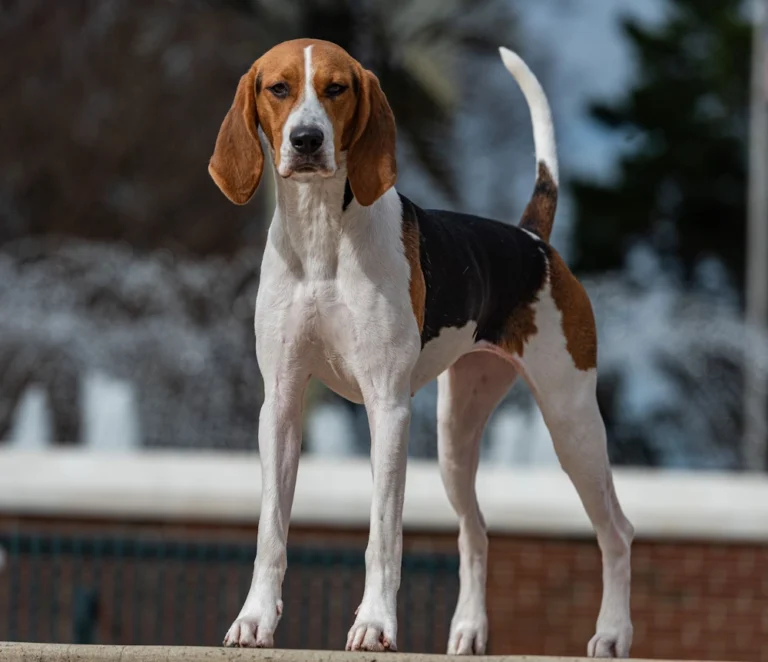
The breed possesses a sturdy, well-balanced body with deep chest, muscular shoulders, solid bone structure, and powerful hindquarters designed for endurance and efficient movement over long distances. The Harrier should appear athletic and durable rather than overly refined or bulky.
One of the breed’s most recognizable features is its classic scent-hound appearance combined with remarkable stamina and agility. The body is slightly longer than tall with smooth balanced proportions suited for all-day hunting work.
The head is moderately broad with a strong muzzle, dark expressive eyes, and gentle alert expression. The breed’s face often conveys friendliness, curiosity, and attentiveness.
The ears are medium length, pendant-shaped, and carried close to the cheeks in traditional hound fashion. The overall expression reflects both determination and sociable temperament.
The coat is short, dense, and weather-resistant, providing practical protection while remaining relatively easy to maintain. Coat colors commonly include tricolor combinations of black, white, and tan, as well as various hound color patterns.
The tail is moderately long and carried upright with slight curve during movement, contributing to the breed’s energetic and balanced appearance.
Movement should appear smooth, tireless, and highly efficient with excellent reach and endurance. The Harrier was developed specifically for sustained hunting work over varied terrain.
Although somewhat similar in appearance to a larger Beagle or smaller English Foxhound, the Harrier maintains its own distinct balance of speed, stamina, and scenting ability.
Overall, the Harrier projects endurance, athleticism, friendliness, and classic scent-hound capability through its balanced structure and energetic movement.
For a broader comparison of how this breed’s size compares to others, see our Dog Size & Weight Guide.
Temperament & Personality
The Harrier is known for being friendly, energetic, affectionate, and highly social. Developed as a cooperative pack hound, the breed generally thrives on companionship and interaction with both people and other dogs.
With family members, Harriers are typically loving, playful, and emotionally connected. Many individuals enjoy participating in household activities and outdoor adventures with their people.
The breed is generally outgoing and socially friendly with both familiar people and strangers when properly socialized. Their cheerful temperament contributes greatly to their appeal as family companions.
Because of their pack-oriented heritage, Harriers usually coexist very well with other dogs and often prefer regular social interaction rather than long periods of isolation.
The breed is energetic and mentally active, often maintaining playful enthusiasm and curiosity throughout adulthood.
Harriers are intelligent but may display independence and selective listening when distracted by scents or environmental stimulation. Their scent-hound instincts are often extremely strong.
The breed is naturally curious and enjoys exploring its environment, especially during outdoor activity involving scents and tracking opportunities.
Because of their emotionally sensitive nature, Harriers generally respond best to calm positive interaction and stable routines. Harsh correction or forceful handling may create resistance or anxiety.
Many Harriers do well with children due to their playful and gentle temperament when properly supervised and socialized.
Without enough exercise and companionship, some individuals may become vocal, restless, or destructive due to boredom and unused energy.
In the right home, the Harrier becomes a cheerful, affectionate, energetic companion with strong scenting instincts and lively family-oriented personality.
For a broader overview of personality differences between breed groups, visit our Dog Breed Temperament Guide.
Exercise & Training Needs
The Harrier is a highly active scent hound that requires substantial daily exercise and mental stimulation to remain physically healthy and behaviorally balanced.
Daily activity should include long walks, hiking, scent games, tracking exercises, running, and interactive outdoor play that engages both body and mind.
Because of the breed’s strong scenting instincts and endurance, simple short walks are generally insufficient for long-term behavioral balance.
Mental stimulation is especially important because intelligent scent hounds may become frustrated or difficult to manage without opportunities to use their natural tracking abilities.
Training requires patience, consistency, and understanding of the breed’s independent hound personality. Harriers are intelligent but may become distracted when following interesting scents.
Positive reinforcement methods using praise, treats, encouragement, and engaging sessions usually produce the best long-term results.
Harsh correction or repetitive forceful handling may reduce cooperation and enthusiasm during training.
Early socialization is important for encouraging confidence around unfamiliar people, animals, sounds, and environments. Positive exposure during puppyhood helps develop stable adaptable adult temperament.
Practise recall using positive rewards, but keep your Harrier on a leash outside securely enclosed areas. A strong scent can override training, so recall practice complements secure fencing and leash management rather than replacing them.
The breed generally thrives best in active homes with secure outdoor areas and owners capable of providing consistent exercise and companionship.
Although energetic outdoors, many well-exercised Harriers are affectionate and relaxed indoors once physical and emotional needs have been properly satisfied.
For owners seeking a friendly, athletic scent hound with high endurance and strong social temperament, the Harrier can become an exceptionally rewarding companion.
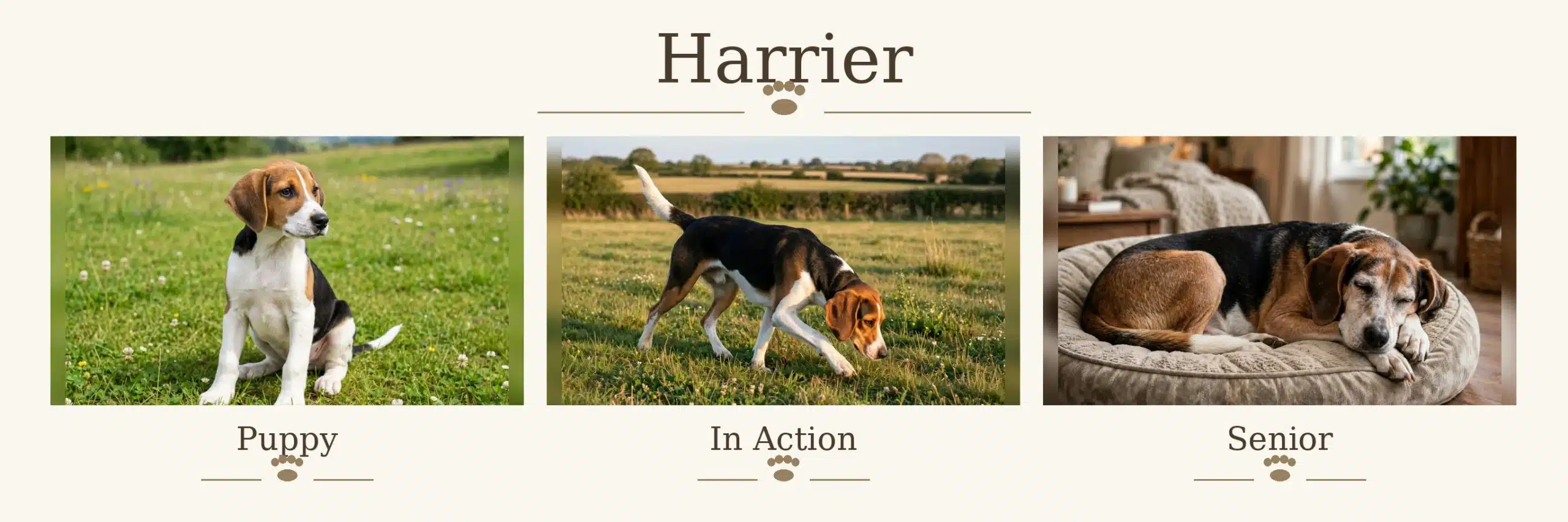
A Harrier puppy is born with its nose already on the job, and benefits from short, positive sessions teaching recall, leash manners, and settling. Keep recall practice in a secure enclosure or on a long line. These jerky treats for dogs (dog-breeds.net approved affiliate link) are the ones we reach for: soft, real-meat, strong-smelling rewards for practising useful everyday skills, and easy to tear small for lots of quick repetitions.
Belly bands can help protect your home while you work on marking or house-training. If an older dog begins leaking urine while resting or sleeping, or develops new accidents that seem unrelated to marking, a veterinary check can help identify the cause. For dogs with incontinence, belly bands offer practical protection alongside any recommended care. Change wet pads promptly and keep the skin clean and dry.
Learn more on our Dog Training Page.
Grooming Requirements
The Harrier has relatively low-maintenance grooming requirements due to its short practical coat and naturally durable structure.
The short dense coat generally requires weekly brushing using a grooming mitt, soft bristle brush, or rubber curry brush to remove loose hair and maintain healthy skin and coat condition.
The breed sheds moderately throughout the year, with somewhat heavier seasonal shedding periods during coat transitions.
Bathing is generally needed only periodically because the coat naturally resists dirt and outdoor debris relatively well. Overbathing should be avoided because it may strip beneficial oils from the skin and coat.
Routine grooming should also include nail trimming, dental care, ear cleaning, and inspection of the skin and coat for irritation, parasites, or debris after outdoor activity.
Because the breed is highly active outdoors, owners should regularly inspect paw pads, nails, and ears following hikes or rough-terrain exercise.
Check the ears regularly and after wet or muddy outings. Clean when needed using an appropriate dog ear cleaner and a routine suited to your dog; healthy, clean ears do not need frequent cleaning. Overcleaning can cause irritation.
Maintaining healthy body weight and muscle tone is especially important for supporting joint health and endurance throughout life.
The Harrier’s short coat is relatively easy to maintain and generally carries minimal odor when properly cared for.
Regular grooming sessions also provide valuable opportunities to monitor overall body condition, skin health, and mobility.
With proper grooming, exercise, preventive care, and structured activity, the Harrier maintains its healthy coat, athletic condition, and energetic scent-hound vitality throughout its life.
That short, dense coat is built to shrug off weather and brush, and it sheds steadily — a weekly once-over keeps the loose hair on the brush instead of the sofa. A soft brush for the regular pass, a rubber grooming brush that pulls the dead coat out at bath time, and a grooming mitt for a finishing shine are the kit we recommend (dog-breeds.net approved affiliate link).
Learn more on our Dog Grooming Page.
Health Overview & Testing
Harriers can enjoy active, comfortable lives with their families. Some inherited and other health concerns occur in the breed, but an individual dog will not necessarily develop them. Documented breeder screening, sensible conditioning, and appropriate everyday care help owners make informed decisions without guaranteeing future health.

Hip dysplasia is an important screening consideration in Harriers, and eye examinations also form part of the breed’s recommended screening. Ask breeders about other concerns in their lines, including any seizure history, rather than assuming a long list of diseases applies to every dog. Maintaining a healthy weight and building activity gradually help support comfortable movement. Our joint and mobility issues guide offers practical advice on recognizing changes and supporting daily comfort.
When a health question comes up between regular vet visits, we use Dutch (dog-breeds.net approved affiliate link) — licensed veterinarians available by video call, often the same day, for advice, treatment plans and prescriptions when appropriate.
Health Testing & Responsible Breeding
For both parents, ask for documented hip evaluations and eye examinations performed by a veterinary ophthalmologist, the breed’s main recommended health screenings. Review the actual results and dates rather than relying on a general statement that the parents were “health tested.”
Hip screening may use OFA or PennHIP evaluations. Elbow, thyroid, or other testing may be appropriate based on family history and veterinary advice, but should be described separately from the breed’s main screening recommendations. Ask about health and longevity in relatives as well. Routine examinations and DNA panels cannot rule out every inherited condition or guarantee that a puppy will never develop epilepsy.
Responsible breeding considers sound movement, stable temperament, documented health results, genetic diversity, and the health and longevity of relatives alongside breed type. Ask breeders how they use this information when planning litters and how they support puppy buyers.
Before Harrier puppies are placed into new homes, they should receive a complete veterinary wellness examination that evaluates the heart, eyes, joints, bite alignment, parasite status, overall structure, and general physical development. Because active hounds place substantial stress on developing bones and joints during growth, proper nutrition and carefully managed exercise during puppyhood are especially important. Puppies should also leave with age-appropriate vaccinations, deworming records, feeding guidance, and recommendations for safe socialization, training, and physical conditioning during development.
A responsible Harrier breeder should willingly provide documentation of completed health clearances and openly discuss inherited health concerns affecting the breed. Puppy buyers should be cautious of breeders who avoid health discussions, refuse to provide testing information, or claim their dogs are completely free of health problems. Ethical breeding focuses on reducing inherited risk through careful selection, health screening, pedigree knowledge, and lifelong breeder support rather than making unrealistic promises.
Preventive Care & Long-Term Wellness
Maintaining healthy body condition and regular exercise is especially important for the Harrier because this breed is naturally energetic, athletic, and mentally active. Without sufficient physical activity and mental stimulation, some individuals may become vocal, destructive, hyperactive, or emotionally frustrated. Regular exercise helps support cardiovascular fitness, muscle tone, coordination, joint stability, and emotional well-being throughout life.
The Harrier is also an intelligent and highly scent-driven breed that benefits from regular mental stimulation and structured interaction. Hiking, scent games, tracking activities, puzzle toys, obedience work, and interactive play all contribute to emotional balance and long-term wellness.
The breed’s short coat is relatively easy to maintain, but regular grooming sessions still provide an excellent opportunity to monitor for parasites, lumps, skin irritation, ear infections, coat-quality changes, or developing health concerns.
Keep an eye on ear comfort and cleanliness, and dry the outer ears after wet outings. New redness, pain, persistent head shaking, or unusual discharge warrants veterinary advice rather than repeated cleaning.
Routine wellness visits can be tailored to your dog’s age, examination findings, and family history. Report new changes in stamina, comfort, movement, or appetite so your veterinarian can decide whether further assessment is useful.
Lifespan & Senior Harrier Care
Harriers typically live approximately 12 to 15 years, with individual variation. Some older dogs benefit from adjustments for stiffness or changing stamina, while others remain comfortable and active. Adapt routines to your dog’s abilities rather than assuming age alone means illness.
Comfortable low-impact activity, a healthy weight, supportive bedding, scent games, and companionship can help maintain quality of life in the senior years. Wellness visits and any treatment can be tailored to your dog’s individual needs.
With attentive care, preventive veterinary support, responsible breeding, and a healthy lifestyle, many Harriers continue to thrive as affectionate, energetic, and highly devoted companions throughout their lives.
A Harrier spends its youth covering miles of country on those legs, and in old age the joints that did the work are the ones that ask for comfort. A thick orthopedic dog bed (dog-breeds.net approved affiliate link) is what we recommend for the senior years: real support under tired hips and shoulders, big enough for a full hound stretch, with a washable cover for the mud a Harrier never quite stops finding.
Is This Breed Right for You?
The Harrier is an energetic, intelligent, and highly social scent hound known for its endurance, friendly personality, and strong hunting instincts. Originally developed for pack hunting, the Harrier thrives when given exercise, companionship, structure, and opportunities to follow its nose and stay mentally engaged.
While affectionate and highly entertaining, the Harrier is not the ideal fit for every household. Here’s a quick overview to help you decide:
✔ Ideal for:
- Active owners who enjoy hiking, walking, or outdoor adventures
- Families seeking a social and interactive companion dog
- People able to provide regular exercise and mental stimulation
- Owners interested in scent work, tracking, or dog sports
- Homes willing to provide companionship and engagement
❌ Not Ideal for:
- People unable to provide regular exercise and activity
- Homes where the dog will frequently be isolated or inactive
- Owners seeking a highly obedient or low-drive dog
- People unprepared for scent-hound independence and vocal tendencies
- Homes unable to provide training and behavioral guidance
Finding a Responsible Breeder or Rescue
If you’re interested in bringing a dog of this breed into your home, consider adopting from a rescue organization or finding a reputable breeder.
Find a Reliable Rescue:
Read our page about how to adopt from a reliable dog rescue.
Find reliable rescues through our Dog Rescue Directory.
Find a Responsible Breeder:
Read our information page about buying a healthy puppy from a responsible breeder.
Find responsible breeders through our Dog Breeders Directory.
Puppy Considerations
Harrier puppies are playful, curious, and highly scent-driven from an early age. Early socialization and positive reinforcement training are important to help puppies develop confidence, emotional stability, and appropriate behavior.
Because these puppies mature into active and independent scent hounds, early structure and healthy outlets for their energy are especially important. Their curiosity, determination, and scent-tracking instincts often become obvious very early in development.
Puppies benefit from:
- Early socialization with people, dogs, sounds, and environments
- Positive reinforcement training and structured routines
- Daily exercise and mentally stimulating activities
- Scent games, confidence-building exercises, and interactive play
- Regular grooming handling and ear-care routines
Because Harrier puppies are active and highly curious, secure fencing and supervised outdoor activity are especially important during development.
Living With a Harrier
Living with a Harrier is often rewarding for owners who appreciate affectionate, energetic, and highly interactive scent hounds. These dogs generally form strong bonds with their families and often enjoy participating in outdoor adventures and active daily routines.
The Harrier requires regular physical exercise and mental stimulation to remain healthy and emotionally balanced. Many enjoy hiking, scent games, tracking activities, interactive play, and outdoor exploration with their families.
This breed generally does best in homes where it receives companionship, structure, training, and opportunities to stay mentally occupied. Without enough engagement or exercise, boredom may lead to excessive barking, stubbornness, destructive behavior, or emotional frustration.
Although affectionate and social with family members, Harriers may naturally be somewhat independent and scent-focused. Early socialization and responsible ownership are important for helping the breed develop into a confident and well-mannered adult.
Feeding a balanced, high-quality diet and maintaining a healthy weight are important for supporting endurance, mobility, muscle condition, orthopedic wellness, and overall quality of life. Routine veterinary care, exercise, training, grooming, and companionship all contribute to helping the breed thrive.
A Harrier comes home from the fields wearing half of them — muddy paws, a coat full of the day, and a firm belief that the sofa is the best seat in the house. These washable, waterproof couch covers (dog-breeds.net approved affiliate link) are the ones we recommend: they catch the mud and the steady shed, and go straight in the wash.
That nose needs a job indoors too, or it will invent one. This enrichment toy (dog-breeds.net approved affiliate link) is the kind we recommend — something to puzzle over and sniff out between walks, at a pace that keeps a clever hound happily occupied.
For everyday walks, a well-fitted harness (dog-breeds.net approved affiliate link) is what we recommend for this breed — choose sturdy construction and a secure, comfortable fit that distributes leash pressure across the chest and allows free shoulder movement. Pair suitable equipment with loose-leash training for safer, more comfortable walks.
And because the classic tricolor hound has been a work of art in English hunting prints for centuries, we love Crown & Paw (dog-breeds.net approved affiliate link) — custom portraits that turn your dog into a work of art.
Final Thoughts…
The Harrier is an affectionate, energetic, and deeply loyal scent hound that thrives with owners who appreciate active companionship and lively interaction. Their endurance, sociable personality, and devotion make them wonderful companions in the right homes.
With proper exercise, preventive care, socialization, training, and companionship, the Harrier can become a deeply rewarding and highly devoted lifelong companion.
Are you considering adding a Harrier to your family?
🐶 Harriers FAQs
How long do Harriers live?
Harriers typically have a lifespan of about 12 to 15 years. With proper nutrition, routine veterinary care, and regular exercise, many remain healthy and active into their senior years.
This breed is generally hardy but may be prone to issues common in active hounds, such as joint concerns or ear infections. Regular checkups and weight management support long-term wellbeing.
What is the Harrier temperament like?
Harriers are known for being friendly, outgoing, and even-tempered. Bred to work in packs, they usually enjoy the company of people and other dogs.
They tend to be energetic and curious, with a strong scenting instinct. Early socialization helps channel their enthusiasm into appropriate behavior.
Are Harriers good family dogs?
Harriers can be good family dogs in active households that can meet their exercise needs. They are typically patient and tolerant, especially with older children.
They do best in homes that provide daily activity and companionship. Consistent routines and supervision help them integrate well into family life.
Do Harriers shed a lot?
Harriers are moderate shedders. Their short, dense coat sheds year-round, with some increase during seasonal coat changes.
Occasional brushing helps manage shedding and keeps the coat healthy. Grooming requirements are relatively low.
Are Harriers easy to train?
Harriers are intelligent but can be independent thinkers, especially when following a scent. Training may require patience and consistency.
Positive reinforcement and structured sessions work best. Early training and socialization help establish reliable manners and focus.
Similar Breeds You Might Like
If you’re interested in the Harrier, you may also enjoy learning about these similar scent hound breeds:
- Beagle – A friendly, curious hound known for energy, sociability, and a family-friendly temperament.
- English Foxhound – A pack-oriented hound valued for endurance, steadiness, and a sociable nature.
- Basset Hound – A laid-back scent hound known for a calm demeanor and strong tracking ability.
Learn more about responsible dog ownership, dog health and daily care:
- Dog Rescue: Adopt a Dog Only From Reliable Rescues
- Choosing a Healthy Puppy from a Dog Breeder
- Healthy Diets
- Bathing, Ear, Teeth and Nail Care
- Senior Dog Guide
- Browse all dog breeds in our complete alphabetical dog breeds directory.