


Ibizan Hound: The Sleek and Agile Sighthound
The Ibizan Hound is an ancient and elegant sighthound breed known for its remarkable athleticism, graceful appearance, and intelligent, sensitive temperament. Originally developed on the Mediterranean island of Ibiza for hunting rabbits across rocky terrain, the Ibizan Hound combines incredible speed, agility, and jumping ability with a loyal and affectionate nature that forms deep bonds with its family. These highly athletic dogs thrive with active owners who can provide regular exercise, mental stimulation, and secure outdoor space, as Ibizan Hounds are natural hunters with strong sight-driven instincts and a love of running. While playful and often clownish with their people, the breed can also be independent and reserved with strangers, making early socialization and gentle, consistent training especially important. With their striking upright ears, sleek athletic build, and unique combination of elegance and athleticism, the Ibizan Hound is best suited for active households seeking an intelligent and deeply devoted companion dog.
⭐ 3 Things You May Not Know About the Ibizan Hound
- The Ibizan Hound is known for grooming itself in a cat-like manner and is often considered one of the cleanest dog breeds.
- Ibizan Hounds are extraordinary jumpers and can leap impressive heights from a standing position because of their athletic build and powerful hind legs.
- Ancient artwork and carvings from the Mediterranean region depict dogs remarkably similar to modern Ibizan Hounds, contributing to the breed’s reputation as an ancient hunting dog.
🐾 Ibizan Hound Breed Overview
- Size: Medium to Large
- Weight: 45–65 lbs
- Lifespan: 11–14 years
- Temperament: Intelligent, Playful, Affectionate
- Coat: Short or Wire-Haired
- Exercise Needs: High
- Group: Hound
🐾 Quick Facts About the Ibizan Hound
- Energy Level: High — Ibizan Hounds are athletic dogs that need regular exercise and room to run safely.
- Grooming Needs: Low — Their short or wire coat is relatively easy to maintain with occasional brushing.
- Good With Kids: Can be a good companion for respectful children; supervise interactions and consider the individual dog’s temperament and size.
- Trainability: Moderate — Intelligent but independent, they respond best to patient and positive training methods.
- Barking Level: Low to Moderate — Ibizan Hounds are usually fairly quiet but may bark when alert or excited.
Jump to Section
- History & Origin
- Breed Traits & Personality
- Exercise & Training Needs
- Grooming Requirements
- Health Overview & Testing
- Is This Breed Right for You?
- Finding a Responsible Breeder or Rescue
- Similar Breeds You Might Like
For the products we actually use and recommend for the Ibizan Hound, see Lisa’s Picks for dog products we use and recommend.

History & Origin
The Ibizan Hound originated in the Mediterranean region and is most closely associated with the Balearic Island of Ibiza, off the eastern coast of Spain. The breed is believed to descend from ancient sighthound-type dogs that traveled with Phoenician traders thousands of years ago throughout the Mediterranean. Over centuries, these elegant hunting dogs adapted to the rocky terrain and warm climate of the islands while developing exceptional speed, agility, and endurance.
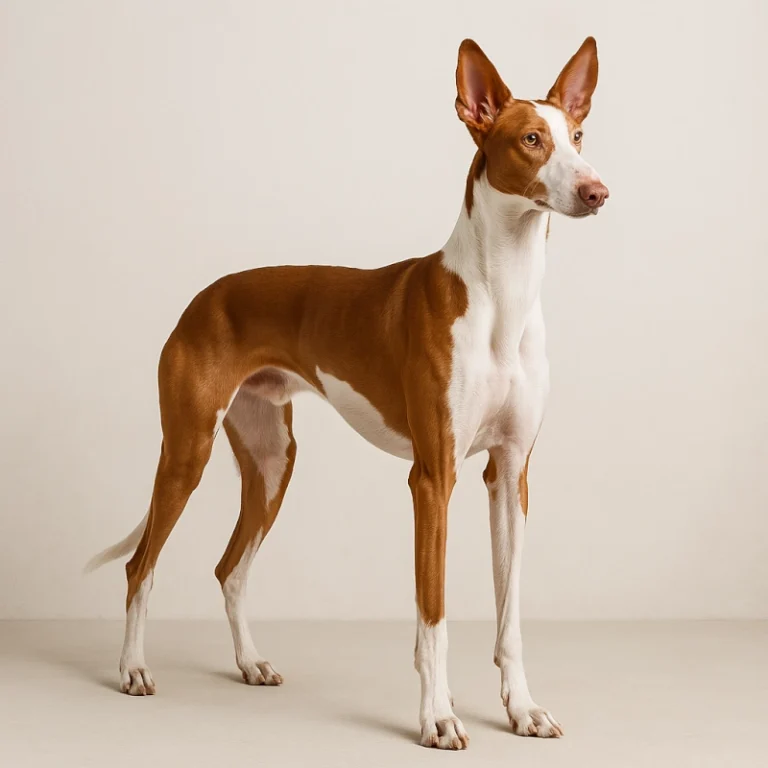
Ibizan Hounds were traditionally used to hunt rabbits and small game across rugged countryside and steep rocky landscapes. Unlike many scent hounds that rely primarily on smell, the Ibizan Hound is called a 3-way hunter and hunts by sight, scent and hearing, using its sharp vision, athleticism, and remarkable jumping ability to pursue fast-moving prey. Hunters valued the breed for its intelligence, agility, and ability to work independently or in coordinated hunting groups.
The breed’s lean muscular body, large upright ears, and graceful movement reflect centuries of adaptation to active hunting work in difficult terrain. Its short coat helped it tolerate the warm Mediterranean climate while maintaining speed and agility during long hunts.
Although the Ibizan Hound has ancient roots, it remained relatively uncommon outside Spain for many years. Interest in preserving the breed gradually spread internationally as enthusiasts admired its elegant appearance, athletic ability, and unique personality.
Modern Ibizan Hounds still retain many characteristics shaped by centuries of Mediterranean hunting work. Their speed, agility, intelligence, and strong prey drive reflect generations of selective breeding for sight hunting and survival in rugged environments. Beneath the breed’s graceful appearance and elegant movement remains a highly athletic and ancient hunting dog deeply connected to the history and culture of the Mediterranean islands.
Author Note: Lisa Puskas conducted extensive historical research into the Ibizan Hound, tracing the breed back to some of the earliest pedigree registrations in Spain while studying historical breeding records and archaeological references tied to Mediterranean hunting dogs. She has written three books on the breed.
Breed Traits & Personality
The Ibizan Hound is an elegant and athletic sighthound known for its tall slender body, large upright ears, graceful movement, and remarkable agility. Originating from the Mediterranean island of Ibiza, the breed was historically used for hunting rabbits and small game across rocky terrain using both sight and scent.
The breed possesses a lean athletic frame with long legs, deep chest, narrow waist, and flexible muscular structure designed for speed, jumping ability, and endurance. The Ibizan Hound should appear refined, agile, and balanced rather than heavy or bulky.
One of the breed’s most recognizable features is its large upright ears, which contribute greatly to its alert and highly expressive appearance. The ears are mobile and highly responsive to environmental sounds and movement.
The head is long and narrow with a refined muzzle, amber-colored eyes, and intelligent gentle expression. The breed’s face often conveys alert curiosity, sensitivity, and calm attentiveness.
The coat may be smooth or wire-haired depending on the individual dog. Both varieties are relatively low-maintenance and designed to withstand outdoor hunting conditions.
Coat colors most commonly include combinations of white and red, solid red, or solid white. The clean coloration contributes greatly to the breed’s striking appearance.
The tail is long and slender, carried naturally with slight curve during movement. Movement should appear effortless, flowing, and highly athletic with exceptional agility and coordination.
The Ibizan Hound is especially known for its impressive jumping ability and nimbleness, allowing it to navigate difficult rocky terrain while hunting.
Although elegant and refined in appearance, the breed remains fundamentally a durable hunting dog with remarkable speed, stamina, and environmental awareness.
Overall, the Ibizan Hound projects elegance, athleticism, alertness, and ancient sighthound character through its streamlined structure and expressive upright ears.
For a broader comparison of how this breed’s size compares to others, see our Dog Size & Weight Guide.
Temperament & Personality
The Ibizan Hound is known for being affectionate, intelligent, playful, and emotionally sensitive. This breed forms strong bonds with its family while maintaining the independent nature associated with traditional hunting hounds.
With family members, Ibizan Hounds are typically loving, playful, and emotionally connected. Many individuals enjoy close companionship and thrive when included in daily household activities.
The breed is generally gentle and socially adaptable when properly socialized. Ibizan Hounds are often friendly with both familiar people and strangers, although some individuals may initially appear somewhat reserved in unfamiliar situations.
Because of their sensitive temperament, Ibizan Hounds generally respond best to calm positive interaction and stable household routines. Harsh correction or forceful handling may create anxiety or reduce confidence.
The breed is intelligent and capable of learning quickly, although independent thinking and occasional stubbornness may appear during training sessions.
Ibizan Hounds are naturally alert and observant, often quietly monitoring their environment while remaining calm and graceful indoors.
Because of their strong prey drive and sighthound instincts, many Ibizan Hounds are highly responsive to movement and may instinctively chase small animals or fast-moving objects outdoors.
The breed often maintains playful youthful energy throughout much of adulthood while still enjoying quiet relaxation with family members indoors.
Many Ibizan Hounds live comfortably with other dogs. Compatibility with cats and smaller pets depends on the individual and careful management; early socialization does not guarantee safety. Introduce animals gradually under supervision and use secure separation when needed, especially around small animals that run.
Because of their deeply social temperament, the breed generally does not thrive when isolated for long periods without companionship or stimulation.
In the right home, the Ibizan Hound becomes a graceful, affectionate, emotionally connected companion with lively personality and exceptional athletic ability.
For a broader overview of personality differences between breed groups, visit our Dog Breed Temperament Guide.
Exercise & Training Needs
The Ibizan Hound is an active athletic breed that requires regular exercise and mental stimulation to remain physically healthy and behaviorally balanced.
Daily walks, running opportunities, fenced play areas, lure coursing, hiking, and interactive outdoor activities help satisfy the breed’s physical and emotional needs.
Keep Ibizan Hounds on a leash outside securely enclosed areas. Check fencing, gates, and potential launching points with their exceptional jumping ability in mind; a fence suitable for another breed may not contain an Ibizan. Practise recall, but do not rely on it to stop a chase.
Mental stimulation is also important because intelligent under-stimulated hounds may become bored or develop unwanted behaviors without enough engagement.
Training is generally rewarding when sessions remain positive, patient, and engaging. Ibizan Hounds are intelligent but often independent thinkers that respond best to relationship-based training.
Positive reinforcement methods using praise, treats, encouragement, and consistency usually produce the best long-term results.
Harsh correction or repetitive forceful handling may reduce trust or create emotional stress in this sensitive breed.
Early socialization is important for encouraging confidence around unfamiliar people, animals, environments, and sounds. Positive exposure during puppyhood contributes greatly to stable adaptable adult temperament.
The breed often excels in canine activities including lure coursing, agility, obedience, rally, and companion sports that encourage movement and mental focus.
Although athletic outdoors, many Ibizan Hounds are surprisingly calm and relaxed indoors once exercise needs have been properly met.
The breed generally adapts well to many living situations provided regular exercise, companionship, and secure outdoor opportunities are consistently available.
For owners seeking an affectionate, elegant athletic breed with moderate-to-high exercise needs and sensitive temperament, the Ibizan Hound can become an exceptionally rewarding companion.
An Ibizan puppy is all ears and springs, and benefits from short, positive sessions teaching recall, leash manners, and settling. Practise recall in a secure enclosure or on a long line; it complements fencing and leash management rather than replacing them. These jerky treats for dogs (dog-breeds.net approved affiliate link) are the ones we reach for: soft, real-meat, strong-smelling rewards worth coming back for, easy to tear small for lots of quick repetitions.
Belly bands can help protect your home while you work on marking or house-training. If an older dog begins leaking urine while resting or sleeping, or develops new accidents that seem unrelated to marking, a veterinary check can help identify the cause. For dogs with incontinence, belly bands offer practical protection alongside any recommended care.
Learn more on our Dog Training Page.
Grooming Requirements
The Ibizan Hound has relatively low-maintenance grooming requirements regardless of coat type.
Smooth-coated individuals generally require weekly brushing using a grooming mitt, soft bristle brush, or rubber curry brush to remove loose hair and maintain healthy skin and coat condition.
Wire-haired Ibizan Hounds benefit from gentle brushing to remove loose hair and debris. Both smooth and wire coats should remain natural and untrimmed; routine hand-stripping, clipping, or sculpting is not appropriate for maintaining the breed’s natural coat.
The breed sheds lightly to moderately throughout the year, with somewhat heavier seasonal shedding periods during coat transitions.
Bathing is generally needed only periodically because the coat naturally remains relatively clean and low-odor in most individuals.
Routine grooming should also include nail trimming, dental care, ear cleaning, and inspection of the skin for cuts or irritation.
Because of the breed’s thin skin and lean body structure, owners should monitor for scrapes, pressure sores, or sensitivity following vigorous activity.
The Ibizan Hound’s short coat provides relatively limited insulation during cold weather, and many individuals benefit from coats or sweaters in colder temperatures.
Regular dental hygiene and preventive veterinary care are important for maintaining long-term overall health and physical condition.
The breed’s large upright ears should also be inspected regularly to maintain cleanliness and healthy ear condition.
With proper grooming, exercise, preventive care, and comfortable living conditions, the Ibizan Hound maintains its sleek coat, athletic condition, and graceful sighthound vitality throughout its life.
That short, smooth coat is nearly wash-and-wear — a weekly once-over keeps the loose hair on the brush instead of the sofa. A soft brush for the regular pass, a rubber grooming brush that pulls the dead coat out at bath time, and a grooming mitt for a finishing shine are the kit we recommend (dog-breeds.net approved affiliate link).
Learn more on our Dog Grooming Page.
Health Overview & Testing
Ibizan Hounds can enjoy active, comfortable lives with their families. Some inherited and other health concerns occur in the breed, but an individual dog will not necessarily develop them. Documented breeder screening, appropriate conditioning, and everyday care help owners make informed decisions without guaranteeing future health.

Hip dysplasia, certain eye conditions, autoimmune thyroiditis, and congenital deafness are important screening considerations in Ibizan Hounds. Ask breeders about other concerns in their lines rather than assuming a broad list of diseases applies to every dog. Owners should also recognize the emergency signs of bloat with stomach twisting (gastric dilatation-volvulus, or GDV). Our joint and mobility issues guide offers practical advice on comfortable movement and recognizing changes.
When a health question comes up between regular vet visits, we use Dutch (dog-breeds.net approved affiliate link) — licensed veterinarians available by video call, often the same day, for advice, treatment plans and prescriptions when appropriate.
Health Testing & Responsible Breeding
Ask for documented health screening results for both parents, including hip evaluations, OFA CAER eye examinations by a board-certified veterinary ophthalmologist, autoimmune thyroiditis testing through an approved laboratory, and BAER hearing testing. These are distinct clinical evaluations; a general DNA panel does not replace them.
Hip screening may use OFA or PennHIP evaluations. Ask about cardiac evaluations as well, which are included in the current national breed-club health guidance. Review actual results and dates with the breeder, and confirm current OFA requirements when checking CHIC records. A CHIC number reflects completion and public disclosure of required screening, not a guarantee that all findings were normal or that offspring will remain free of disease.
Responsible breeding considers sound movement, stable temperament, documented health results, genetic diversity, and the health and longevity of relatives alongside breed type. Ask breeders how they use this information when planning litters and how they support puppy buyers.
Before Ibizan Hound puppies are placed into new homes, they should receive a complete veterinary wellness examination that evaluates the heart, eyes, joints, bite alignment, parasite status, overall structure, and general physical development. Because athletic breeds place significant stress on developing muscles and joints during growth, proper nutrition and carefully managed exercise during puppyhood are especially important. Puppies should also leave with age-appropriate vaccinations, deworming records, feeding guidance, and recommendations for safe socialization, training, and physical conditioning during development.
A responsible Ibizan Hound breeder should willingly provide documentation of completed health clearances and openly discuss inherited health concerns affecting the breed. Puppy buyers should be cautious of breeders who avoid health discussions, refuse to provide testing information, or claim their dogs are completely free of health problems. Ethical breeding focuses on reducing inherited risk through careful selection, health screening, pedigree knowledge, and lifelong breeder support rather than making unrealistic promises.
Preventive Care & Long-Term Wellness
Maintaining healthy body condition is especially important for the Ibizan Hound because this breed is naturally lean, athletic, and highly agile. Ibizan Hounds should not carry excess body fat, but they also should not become poorly conditioned or underweight. Balanced nutrition, portion control, and regular moderate exercise all help support cardiovascular fitness, muscle tone, coordination, joint stability, and long-term mobility.
The Ibizan Hound is also an intelligent and emotionally sensitive breed that benefits from companionship, structure, and regular interaction. Walks, lure coursing, scent games, puzzle toys, obedience work, and safe opportunities to run in secure fenced areas all contribute to emotional balance and long-term wellness.
The breed’s short coat is relatively easy to maintain, although routine grooming still provides an excellent opportunity to monitor for skin irritation, parasites, lumps, coat-quality changes, or developing health concerns.
Because the Ibizan Hound is a deep-chested breed at risk for bloat and gastric torsion, owners should learn the warning signs, including abdominal swelling, pacing, drooling, unsuccessful vomiting attempts, and sudden distress. Immediate emergency veterinary treatment is critical if these symptoms occur.
Routine wellness visits can be tailored to your dog’s age, examination findings, and family history. Report new changes in stamina, comfort, movement, or appetite so your veterinarian can decide whether further assessment is useful. Before any procedure, the veterinary team can plan anesthesia and monitoring for the individual dog rather than assuming every Ibizan will react poorly.
Lifespan & Senior Ibizan Hound Care
Ibizan Hounds typically live approximately 11 to 14 years, with individual variation and some living longer. Aging is individual, and illness is not inevitable. Tailor activity and home comforts to the dog’s needs, and discuss meaningful changes in comfort, movement, appetite, or behavior with your veterinarian. See our senior dog guide for practical support.
Comfortable low-impact activity, a healthy weight, supportive bedding, gentle enrichment, and companionship can help maintain quality of life in the senior years. Wellness visits and any treatment can be tailored to your dog’s individual needs.
With attentive care, preventive veterinary support, responsible breeding, and a healthy lifestyle, many Ibizan Hounds continue to thrive as affectionate, athletic, and highly devoted companions throughout their lives.
An Ibizan spends its youth folded into impossible shapes on the furniture, and in old age those long legs and that deep chest ask for real support underneath. A thick orthopedic dog bed (dog-breeds.net approved affiliate link) is what we recommend for the senior years: proper cushioning for a tall, bony frame, with a washable cover.
Is This Breed Right for You?
The Ibizan Hound is an elegant, intelligent, and highly athletic sighthound known for its speed, agility, and gentle personality. Originally developed for rabbit hunting, the Ibizan Hound thrives when given companionship, moderate exercise, structure, and safe opportunities to run and explore.
While affectionate and adaptable, the Ibizan Hound is not the ideal fit for every household. Here’s a quick overview to help you decide:
✔ Ideal for:
- Active owners who enjoy walking, hiking, or outdoor adventures
- Families seeking a gentle and athletic companion dog
- Homes with secure fencing and safe exercise areas
- People comfortable managing a breed with strong prey drive
- Owners interested in lure coursing or canine sports
❌ Not Ideal for:
- People unable to provide regular exercise and companionship
- Homes without secure fencing or safe containment
- Owners seeking a highly obedient or off-leash reliable dog
- People unprepared for strong chasing instincts
- Homes unable to provide calm handling and responsible management
Finding a Responsible Breeder or Rescue
If you’re interested in bringing a dog of this breed into your home, consider adopting from a rescue organization or finding a reputable breeder.
Find a Reliable Rescue:
Read our page about how to adopt from a reliable dog rescue.
Find reliable rescues through our Dog Rescue Directory.
Find a Responsible Breeder:
Read our information page about buying a healthy puppy from a responsible breeder.
Find responsible breeders through our Dog Breeders Directory.
Puppy Considerations
Ibizan Hound puppies are playful, curious, and highly athletic from an early age. Early socialization and positive reinforcement training are important to help puppies develop confidence, emotional stability, and appropriate behavior.
Because these puppies mature into agile and fast-moving sighthounds, early structure and safe outlets for their energy are especially important. Their prey drive, jumping ability, and athletic instincts often become obvious very early in development.
Puppies benefit from:
- Early socialization with people, dogs, sounds, and environments
- Positive reinforcement training and structured routines
- Daily exercise and mentally stimulating activities
- Confidence-building exercises and calm interaction
- Safe enclosed areas for controlled running and play
Because Ibizan Hound puppies are naturally athletic and physically agile, owners should avoid repetitive high-impact exercise or excessive strain during development.
Living With an Ibizan Hound
Living with an Ibizan Hound is often rewarding for owners who appreciate elegant, affectionate, and highly interactive companion dogs. These dogs generally form strong bonds with their families and often enjoy participating in outdoor adventures and active daily routines.
The Ibizan Hound requires regular physical exercise and mental stimulation to remain healthy and emotionally balanced. Many enjoy walks, lure coursing, scent games, puzzle toys, and safe opportunities to run in secure fenced areas.
This breed generally does best in homes where it receives companionship, structure, calm handling, and responsible management. Without enough interaction or exercise, boredom, anxiety, or emotional sensitivity may become more noticeable.
Although affectionate and friendly with family members, Ibizan Hounds may naturally have strong prey drive toward smaller animals. Early socialization and responsible ownership are important for helping the breed develop into a confident and manageable adult.
Feeding a balanced, high-quality diet and maintaining healthy body condition are important for supporting cardiovascular health, mobility, muscle tone, orthopedic wellness, and overall quality of life. Routine veterinary care, exercise management, training, and companionship all contribute to helping the breed thrive.
Ask any Ibizan owner: the breed’s true calling is holding down the sofa, ideally at full stretch. These washable, waterproof couch covers (dog-breeds.net approved affiliate link) are the ones we recommend: they catch the short red hairs and the occasional muddy paw, and go straight in the wash.
A Beezer brain needs a hobby between runs, or it will invent one involving your cushions. This enrichment toy (dog-breeds.net approved affiliate link) is the kind we recommend — something to puzzle over and work at, at a pace that keeps a clever hound happily occupied.
For everyday walks, a well-fitted harness (dog-breeds.net approved affiliate link) is what we recommend for this breed — choose sturdy construction and a secure, comfortable fit that distributes leash pressure across the chest and allows free shoulder movement. Check whether your dog can back out of the harness, and pair suitable equipment with calm leash training.
And because those expressive ears and elegant lines deserve a portrait, we love Crown & Paw (dog-breeds.net approved affiliate link) — custom portraits that turn your dog into a work of art.
Final Thoughts…
“The Ibizan Hound is far more than simply an elegant and athletic sighthound. Having lived with the breed since 1974 — even before full AKC recognition — and spending decades deeply involved with the breed through showing, breeding, writing, and preservation work, I have found the Ibizan Hound to be one of the most unique and rewarding breeds in the dog world.
Although the breed is known for its graceful appearance and remarkable hunting ability, what many people do not immediately realize is how affectionate, entertaining, and deeply family-oriented Ibizan Hounds truly are. Well-bred Ibizans are wonderful family companions that typically adore children and form strong emotional bonds with their people. They are sensitive, intelligent dogs that thrive when included as true members of the family.
At the same time, the Ibizan Hound remains a tireless and highly capable hunter with exceptional speed, agility, endurance, and instinct. Their athletic ability and natural hunting drive should never be underestimated. Responsible owners must understand that beneath the elegant exterior is a true working hound bred for serious hunting performance and independent problem-solving.
One of the most charming qualities of the breed is its happy, playful, and almost clown-like personality. Many Ibizan Hounds retain a youthful sense of humor and joy well into their senior years. Their playful antics, intelligence, and expressive nature are part of what makes the breed so beloved by longtime enthusiasts.
Having chaired the Ibizan Hound Club of the United States breed standard committee responsible for revising the AKC breed standard, and after breeding multiple Best in Show-winning Ibizan Hounds, I strongly believe that preserving correct temperament, sound movement, functional athleticism, and healthy structure is far more important than exaggeration or fleeting show-ring trends. A proper Ibizan Hound should combine elegance, balance, endurance, intelligence, athleticism, and stable temperament while still remaining capable of performing the work for which the breed was originally developed.
In my experience, the best Ibizan Hounds are those that combine beauty, soundness, intelligence, humor, and companionship while still retaining the athletic ability and instinct that define the breed. They are truly a remarkable balance of graceful athlete, devoted family dog, and joyful lifelong companion.” ~ Lisa Puskas
Are you considering adding an Ibizan Hound to your family?
🐶 Ibizan Hounds FAQs
How long do Ibizan Hounds live?
Ibizan Hounds typically have a lifespan of about 11 to 14 years. With proper nutrition, regular veterinary care, and appropriate exercise, many remain healthy and active into their senior years.
This breed is generally hardy but may be prone to certain conditions such as allergies or thyroid issues. Routine health screenings and maintaining a healthy weight help support long-term wellbeing.
What is the Ibizan Hound temperament like?
Ibizan Hounds are known for being intelligent, gentle, and independent. They tend to be affectionate with their families while maintaining a thoughtful, self-directed nature.
They are often alert and curious, with a strong prey drive typical of sighthounds. Early socialization helps ensure balanced behavior in a variety of environments.
Are Ibizan Hounds good family dogs?
Ibizan Hounds can be good family dogs in households that understand sighthound behavior. They are typically gentle and tolerant with children.
They do best in homes that provide regular exercise and mental stimulation. Supervision and respectful interaction help support positive family relationships.
Do Ibizan Hounds shed a lot?
Ibizan Hounds are light shedders. Their short, smooth coat sheds minimally and is easy to maintain. The wire hair Ibizan Hounds shed a bit more.
Occasional brushing helps remove loose hair and keeps the coat healthy. Grooming needs are generally low.
Are Ibizan Hounds easy to train?
Ibizan Hounds are intelligent but independent thinkers, which can make training moderately challenging. They may not respond well to repetitive or forceful methods.
Positive reinforcement, patience, and consistency work best. Early training and socialization help establish good manners and reliability.
Similar Breeds You Might Like
If you’re interested in the Ibizan Hound, you may also enjoy learning about these similar sighthound breeds:
- Pharaoh Hound – A closely related sighthound known for elegance, intelligence, and an affectionate nature.
- Greyhound– A gentle, athletic sighthound valued for speed and a calm temperament indoors.
- Whippet – A smaller sighthound known for agility, affection, and adaptability to home life.
Learn more about responsible dog ownership, dog health and daily care:
- Dog Rescue: Adopt a Dog Only From Reliable Rescues
- Choosing a Healthy Puppy from a Dog Breeder
- Healthy Diets
- Bathing, Ear, Teeth and Nail Care
- Senior Dog Guide
- Browse all dog breeds in our complete alphabetical dog breeds directory.