

A Complete Veterinary Guide for Dog Owners
Back pain, hip pain, and rear leg weakness in dogs are common mobility problems that can affect dog breeds of any breed or age. These symptoms may be caused by spinal disease, hip dysplasia, arthritis, nerve compression, neurological conditions, or injuries affecting the hind legs. Because many conditions share similar symptoms, veterinary evaluation is often needed to determine the exact cause.
Quick Navigation: What This Guide Covers
This page is designed as a complete educational resource about back pain, hip pain, and rear leg weakness in dogs. Use the links below to jump to the section that interests you most.
- Understanding the canine spine and hind limb anatomy
- Signs of back pain and spinal problems in dogs
- The most common causes of rear leg weakness in dogs
- Rear leg weakness in dogs
- Hip dysplasia and hip arthritis in dogs
- Knee injuries and cruciate ligament tears
- Intervertebral disc disease (IVDD)
- Degenerative myelopathy in older dogs
- How veterinarians diagnose back pain and mobility problems
- Treatment options for dogs with back pain or hind leg weakness
- Non-NSAID pain treatments for dogs
- Physical therapy and rehabilitation for dogs
- How to tell where your dog’s pain may be coming from
- Symptoms and possible causes comparison chart
- When back pain or rear leg weakness becomes an emergency
- Rear leg weakness in dogs by age
- Quick answers about back pain and hind leg weakness
- Frequently asked questions about canine back and hip pain
Key Takeaways about Back Pain and Rear Leg Weakness in Dogs
What Dog Owners Should Understand:
Back pain, hip pain, and rear leg weakness in dogs can result from several conditions affecting the spine, nerves, joints, or muscles. Because many of these problems share similar symptoms, veterinary evaluation is often necessary to determine the underlying cause.
• Rear leg weakness is often related to spinal or nerve problems rather than just hip pain.
• Common causes include arthritis, hip dysplasia, intervertebral disc disease, nerve compression, and degenerative myelopathy.
• Certain dog breeds may have a higher risk of spinal disorders or orthopedic conditions.
• Early diagnosis can significantly improve treatment outcomes and mobility.
• Dogs that suddenly lose strength in their back legs should be examined by a veterinarian as soon as possible.
Understanding the signs of back pain and mobility problems can help dog owners seek treatment early and improve their dog’s quality of life.
What Causes Back Pain and Rear Leg Weakness in Dogs?
Back pain and rear leg weakness in dogs can be caused by several conditions, including spinal disc disease, hip dysplasia, arthritis, nerve compression in the lower spine, cruciate ligament injuries, and degenerative neurological diseases such as degenerative myelopathy. A veterinary examination is usually required to determine the exact cause of a dog’s mobility problems.
Many dog owners first notice subtle changes such as stiffness when their dog gets up, reluctance to jump onto furniture, difficulty climbing stairs, or a slower walking pace. In other cases, the symptoms appear suddenly, such as limping, wobbling in the back legs, or even falling while walking.
Although arthritis is often the first condition people think of, pain and weakness affecting the mid-back, lower spine, hips, and rear legs can originate from several different parts of the body. Problems may involve the spinal cord, nerves, intervertebral discs, hip joints, knee ligaments, or muscles that support the hind limbs.
Understanding the possible causes of mobility problems in dogs is important because treatment varies depending on the underlying condition. What appears to be simple hip pain may actually be caused by nerve compression in the lower spine, while what seems like rear leg weakness in dogs could originate from degeneration of the spinal cord itself.
Many veterinary neurologists explain that the lumbar spine and sacral region of the back play a crucial role in hind-leg function. Nerves exiting the spinal cord in this region control movement, strength, coordination, and sensation in the rear legs. When these nerves become irritated, inflamed, or compressed, dogs may develop symptoms that include:
• weakness in the hind legs
• difficulty standing or rising
• wobbling while walking
• dragging the rear feet
• loss of coordination
• pain when touched along the lower back
Because dogs naturally hide pain, these symptoms may develop gradually before they become obvious to owners.
Certain dog breeds are more prone to spinal or orthopedic problems that can cause mobility issues. For example, large dog breeds such as German Shepherds, Labrador Retrievers, Golden Retrievers, and Rottweilers often develop hip dysplasia or arthritis affecting the rear limbs. Meanwhile, some smaller dog breeds may have a higher incidence of conditions such as luxating patellas or intervertebral disc disease, which can also lead to weakness in the hind legs.
Age is another important factor. As dogs grow older, the joints, discs, and ligaments of the spine naturally undergo wear and tear. Over time this degeneration can contribute to chronic pain, nerve compression, or neurological disease affecting the dog’s ability to move normally.
This comprehensive guide will explain the most common causes of back pain, hip pain, and rear leg weakness in dogs, including spinal disorders, orthopedic injuries, and neurological diseases. We will also explore how veterinarians diagnose these conditions and what treatment options may help improve mobility and comfort.
Why Mobility Problems in Dogs Should Never Be Ignored
Changes in mobility are often one of the first signs that something is wrong with a dog’s spine, hips, or nervous system. Even mild symptoms, such as occasional stumbling or hesitation before jumping, may indicate the early stages of an underlying condition.
Early diagnosis can make a significant difference in treatment outcomes. Many spinal and orthopedic problems respond much better when addressed early before severe nerve damage or joint degeneration occurs.
For example:
• spinal disc problems may be treated with medication and rest when caught early
• hip arthritis can often be managed with weight control and joint therapy
• nerve compression may improve with physical therapy and anti-inflammatory treatment
Waiting too long to seek veterinary care can sometimes allow the condition to worsen.
Questions to Ask Your Veterinarian
If your dog is showing signs of back pain or rear leg weakness, consider discussing the following questions with your veterinarian:
• Could my dog’s symptoms be related to spinal disease rather than arthritis?
• Should my dog receive X-rays or advanced imaging such as MRI or CT scans?
• Are neurological tests necessary to evaluate nerve function?
• What treatments may help reduce pain and improve mobility?
• Are there non-NSAID pain management options available for my dog?
🐾 Understanding the Canine Spine and Hind Limb Anatomy
To understand why dogs develop back pain, hip pain, or weakness in the rear legs, it helps to first understand how the canine spine and nervous system control movement.
The spine is one of the most important structures in a dog’s body. It protects the spinal cord, which carries nerve signals from the brain to the muscles throughout the body. These nerve signals control movement, coordination, sensation, and reflexes.
When the spine, discs, joints, or nerves become damaged or inflamed, those nerve signals can be disrupted. This is why many spinal conditions cause symptoms such as rear leg weakness, wobbling, or loss of coordination, even though the original problem is located in the back.
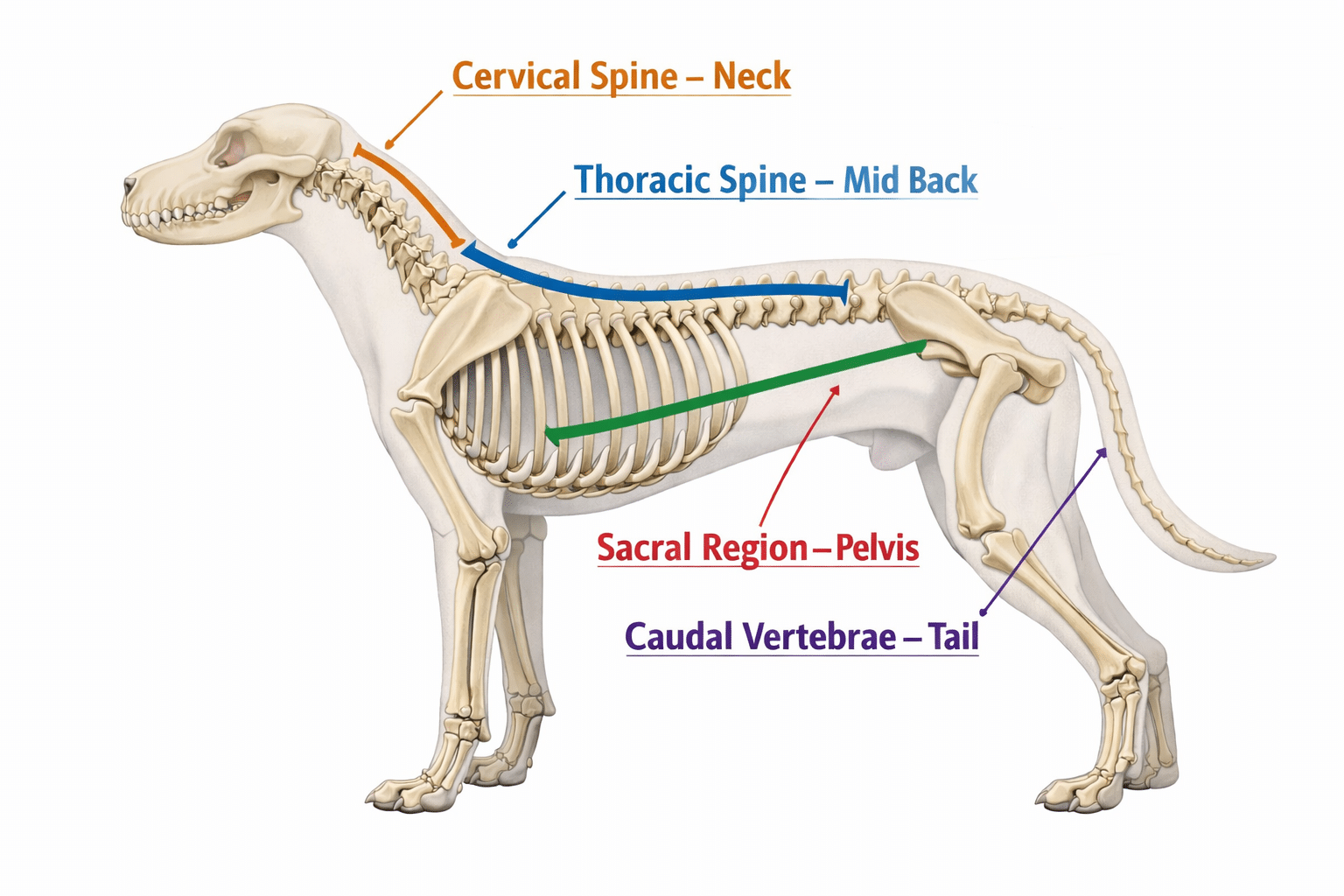
Major Regions of the Dog’s Spine
The canine spine is divided into five major sections. Each region has a specific role in supporting movement and protecting the spinal cord.
Cervical Spine (Neck)
The cervical spine consists of seven vertebrae located in the neck. This region allows the dog to move its head up, down, and side-to-side.
Because the cervical spine is highly flexible, it is also vulnerable to injuries, disc disease, and instability. Problems in this region can sometimes cause neck pain or weakness affecting all four limbs.
Thoracic Spine (Mid Back)
The thoracic spine is the longest portion of the spine, extending from the shoulders through the rib cage. These vertebrae attach to the ribs and provide stability and protection for the chest organs.
This area is generally more stable than the neck or lower back because the ribs help support the vertebrae. However, disc disease and arthritis can still occur in the thoracic spine, particularly in aging dogs.
Lumbar Spine (Lower Back)
The lumbar spine is located in the lower back between the rib cage and the pelvis. This region is especially important for hind leg movement.
Nerves exiting the lumbar spine control many functions in the rear legs, including muscle strength and coordination. Because this part of the spine bears significant weight and movement, it is a common location for problems such as:
• spinal arthritis
• disc degeneration
• nerve compression
• muscle strain
When the lumbar spine becomes inflamed or compressed, dogs may develop symptoms such as rear leg weakness, difficulty standing, or reluctance to jump.
Sacral Region (Pelvis)
The sacral region connects the spine to the pelvis. This area is important for transferring force between the spine and the hind limbs.
One important condition affecting this region is lumbosacral stenosis, a degenerative disorder that causes compression of nerves leaving the spinal cord. This condition can produce symptoms such as:
• pain in the lower back
• weakness in the rear legs
• difficulty rising
• reluctance to climb stairs
Large dog breeds such as German Shepherds and Labrador Retrievers are known to have a higher incidence of this condition.
Caudal Vertebrae (Tail)
The caudal vertebrae make up the tail. While these vertebrae do not play a direct role in hind limb movement, they contain nerves that control tail motion and sensation.
Injuries affecting this area can cause tail pain or weakness.
How the Spinal Cord Controls the Rear Legs
Inside the vertebrae is the spinal cord, which functions like a communication highway between the brain and the rest of the body.
Nerves branching off the spinal cord control different parts of the body. The nerves responsible for movement and sensation in the hind limbs exit the spinal cord primarily in the lumbar and sacral regions.
When these nerves become compressed or damaged, dogs may experience symptoms such as:
• weakness in the rear legs
• loss of coordination
• dragging the rear feet
• difficulty standing
• instability when walking
In many cases, owners initially believe their dog has hip pain or arthritis, when the real problem is actually located in the spine.
Why Spinal Problems Often Look Like Hip or Leg Problems
One reason spinal disease is often misunderstood is that the symptoms appear in the legs rather than the back.
For example, nerve compression in the lower spine can interfere with the signals controlling the rear legs. As a result, dogs may appear weak or unstable even though the leg joints themselves are healthy.
This is why veterinarians often perform both orthopedic exams and neurological exams when evaluating dogs with rear leg weakness.
Dog Breeds with Higher Risk of Spinal Disorders
Some dog breeds have a higher incidence of certain spinal diseases due to their body structure or genetics.
Examples include:
• Dachshunds — higher risk of intervertebral disc disease (IVDD)
• German Shepherds — higher risk of degenerative myelopathy and lumbosacral stenosis
• Corgis — increased risk of degenerative myelopathy
• French Bulldogs — increased risk of spinal malformations
However, spinal disease can occur in any dog breed, particularly as dogs age.
Why Understanding Spinal Anatomy Matters
Learning how the spine works helps owners recognize the difference between joint pain, muscle injury, and neurological problems.
For example:
Hip dysplasia usually causes pain and stiffness in the hip joints.
Spinal nerve compression often causes weakness or wobbling in the rear legs.
Neurological diseases such as degenerative myelopathy may cause gradual loss of coordination without obvious pain.
Understanding these differences helps veterinarians determine the most appropriate diagnostic tests and treatments.
Questions to Ask Your Veterinarian
If your dog is showing signs of back pain or rear leg weakness, consider asking your veterinarian:
• Could my dog’s symptoms be caused by spinal nerve compression?
• Does my dog need X-rays or advanced imaging such as MRI?
• Are the symptoms more consistent with orthopedic disease or neurological disease?
• Would physical therapy or rehabilitation help improve mobility?
🐾 Rear Leg Weakness in Dogs
Rear leg weakness can result from problems affecting the spine, nerves, hips, knees, or muscles.
Common causes include:
• spinal disc disease
• degenerative myelopathy
• hip dysplasia
• arthritis
• cruciate ligament injuries
• nerve compression
Some dog breeds have a higher incidence of certain orthopedic conditions. For example:
Large dog breeds often develop hip dysplasia, while smaller dog breeds may be more prone to luxating patellas or slipped kneecaps.
Identifying the correct cause is essential because treatments differ significantly depending on the underlying condition.
Sudden Rear Leg Weakness in Dogs
Sudden rear leg weakness in dogs can be frightening for dog owners. When a dog suddenly struggles to stand, collapses, or loses strength in the hind legs, the cause may involve the spine, nerves, joints, or muscles.
In many cases, sudden weakness occurs when a condition affecting the spinal cord or joints develops rapidly.
Possible causes of sudden rear leg weakness include:
• intervertebral disc disease (IVDD)
• spinal trauma or injury
• cranial cruciate ligament tears
• nerve compression in the lower spine
• blood clots affecting spinal circulation
• severe arthritis flare-ups
Dogs experiencing sudden weakness may show symptoms such as:
• difficulty standing
• dragging the rear legs
• wobbling when walking
• sudden limping
• inability to bear weight
Because some of these conditions can progress quickly, dogs that suddenly lose strength in the back legs should be examined by a veterinarian as soon as possible.
Early diagnosis can significantly improve treatment outcomes and may prevent permanent nerve damage.
Questions to Ask Your Veterinarian
• What is the most likely cause of my dog’s rear leg weakness?
• Are neurological tests needed?
• Could this condition worsen over time?
• What could cause my dog to suddenly lose strength in the hind legs?
• Could spinal disc disease or nerve compression be responsible?
• Does my dog need immediate diagnostic testing?
Hip Pain in Dogs
Hip pain is one of the most common orthopedic problems affecting dogs.
The most frequent cause is hip dysplasia, a condition where the hip joint does not fit properly into the socket. Over time, this abnormal structure causes inflammation and arthritis.
Dog breeds with higher risk include:
• German Shepherds
• Labrador Retrievers
• Golden Retrievers
• Rottweilers
• Bernese Mountain Dogs
Signs of hip pain may include:
• bunny hopping when running
• stiffness after resting
• difficulty standing
• reluctance to exercise
Questions for Your Veterinarian
• Could hip dysplasia be causing my dog’s symptoms?
• Are joint supplements or injections helpful?
• Would weight management improve mobility?
Spinal Disease in Dogs
Several spinal conditions can cause pain and weakness.
The most common include:
Intervertebral Disc Disease (IVDD)
Occurs when spinal discs degenerate or rupture.
Lumbosacral Stenosis
Nerve compression in the lower spine.
Degenerative Myelopathy
A progressive neurological disease affecting the spinal cord.
These conditions may cause symptoms ranging from mild pain to paralysis depending on the severity of nerve involvement.
Questions for Your Veterinarian
• Does my dog show neurological deficits?
• Would MRI imaging help diagnose the problem?
• What treatment options are available?
🐾 Signs of back pain and spinal problems in dogs
Dogs are remarkably good at hiding pain. In the wild, showing weakness could make an animal vulnerable, so many dogs instinctively mask discomfort until the problem becomes severe. Because of this, the early signs of spinal pain or nerve problems can be subtle and easy for owners to miss.
Back pain, hip pain, and nerve compression can cause a wide variety of symptoms depending on which part of the spine is affected. Some dogs show obvious pain, while others primarily display weakness, instability, or changes in movement.
Recognizing the early warning signs of spinal problems can help dog owners seek veterinary care before the condition progresses.
Early Signs of Back Pain in Dogs
Many dogs first show mild behavioral changes rather than obvious limping or weakness.
Early warning signs may include:
• reluctance to jump onto furniture or into the car
• hesitation when climbing stairs
• stiffness after resting
• slower walking pace
• difficulty rising from a lying position
• sensitivity when touched along the back
• reduced interest in play or exercise
Some dogs may also develop a slightly arched back posture, which can indicate spinal discomfort.
Because these signs develop gradually, they are often mistaken for normal aging.
Signs of Nerve Compression in the Lower Spine
When nerves in the lumbar or sacral region of the spine become compressed, symptoms often affect the hind limbs rather than the back itself.
Dogs with nerve compression may display:
• weakness in the rear legs
• wobbling when walking
• dragging the back feet
• crossing the rear legs while walking
• difficulty standing up
• slipping on smooth floors
• decreased coordination
These symptoms occur because the nerves responsible for controlling the rear legs are being irritated or compressed.
Many owners initially believe the problem is hip arthritis, but spinal nerve compression is actually a common cause of hind-leg weakness in dogs.
Signs of Severe Spinal Problems
In more advanced cases, spinal disease can cause serious neurological symptoms.
Warning signs that require immediate veterinary attention include:
• sudden inability to stand
• dragging the rear legs
• paralysis of the hind limbs
• loss of bladder or bowel control
• severe pain when touched
• crying or yelping when moving
These symptoms may indicate significant spinal cord compression, which can become a medical emergency.
Early treatment is often critical to prevent permanent nerve damage.
Subtle Signs Many Dog Owners Miss
Some dogs show very subtle symptoms that are easy to overlook.
Examples include:
• worn or scuffed toenails from dragging the feet
• slight wobbling in the hind legs
• occasional stumbling when turning
• standing with the rear legs closer together than normal
• difficulty maintaining balance on slippery surfaces
Veterinary neurologists often recognize these as early signs of neurological disease affecting the spinal cord.
Observing your dog’s movement closely can help identify these changes before they become severe.
Changes in Behavior Related to Pain
Pain affecting the spine or hips can also cause behavioral changes.
Some dogs may become:
• irritable when touched
• reluctant to be picked up
• less active than usual
• withdrawn or quieter than normal
• protective of their back when handled
Because dogs cannot tell us when they are uncomfortable, these behavioral changes are sometimes the only indication that pain is present.
How Age and Dog Breeds Influence Symptoms
Certain dog breeds are genetically predisposed to spinal and orthopedic conditions that may cause back pain or rear leg weakness.
Examples include:
• Dachshunds – high risk of intervertebral disc disease (IVDD)
• German Shepherds – higher incidence of degenerative myelopathy and lumbosacral stenosis
• Corgis – increased risk of degenerative myelopathy
• Labrador Retrievers and Golden Retrievers – increased risk of hip dysplasia and arthritis
However, these conditions can occur in any dog breed, particularly as dogs grow older.
Senior dogs are more likely to develop arthritis, disc degeneration, or neurological diseases that affect mobility.
When Symptoms Appear Suddenly
In some cases, a dog may suddenly develop weakness or pain without warning.
This can occur with conditions such as:
• spinal disc rupture
• cruciate ligament tears
• traumatic injuries
• severe nerve compression
If a dog suddenly loses the ability to walk or shows severe pain, immediate veterinary evaluation is essential.
Prompt treatment can significantly improve the chances of recovery.
Questions to Ask Your Veterinarian
If your dog shows signs of back pain or hind-leg weakness, consider asking your veterinarian:
• Could these symptoms be related to spinal disc disease?
• Are neurological tests needed to evaluate nerve function?
• Would X-rays or advanced imaging help identify the problem?
• Could my dog have degenerative myelopathy or nerve compression?
• What treatments are available to reduce pain and improve mobility?
✨ The Most Common Causes of Rear Leg Weakness in Dogs
| Condition | Area Affected | Typical Symptoms |
|---|---|---|
| Hip Dysplasia | Hip joints | Stiffness, difficulty rising, bunny hopping |
| Arthritis | Joints and spine | Stiffness, reduced activity, pain after rest |
| Intervertebral Disc Disease (IVDD) | Spine | Back pain, weakness, loss of coordination |
| Degenerative Myelopathy | Spinal cord | Gradual rear leg weakness without pain |
| Cranial Cruciate Ligament Tear | Knee joint | Sudden limping, swelling, joint instability |
When dogs begin to lose strength in their back legs, many owners immediately assume the problem is arthritis. While arthritis can certainly cause stiffness and discomfort, it is only one of several conditions that can affect mobility in dogs.
Rear leg weakness can originate from problems affecting the spine, nerves, hips, knees, or muscles. Because these systems all work together to support movement, symptoms can sometimes look very similar even when the underlying cause is different.
Veterinarians often divide these causes into three major categories:
• orthopedic conditions (joints and bones)
• neurological conditions (spinal cord and nerves)
• traumatic injuries (muscles, ligaments, or fractures)
Identifying which category is responsible for a dog’s symptoms is an important step in determining the best treatment plan.
Below are the most common conditions that cause back pain, hip pain, and rear leg weakness in dogs.
🐾 Hip Dysplasia and Hip Arthritis in Dogs
Hip dysplasia is one of the most well-known orthopedic conditions affecting dogs. It occurs when the hip joint does not develop properly, causing the ball of the femur to fit loosely within the hip socket.
Over time, this instability leads to joint inflammation, cartilage damage, and arthritis.
Dogs with hip dysplasia often show symptoms such as:
• stiffness after resting
• difficulty standing up
• reluctance to jump or climb stairs
• a “bunny hopping” gait when running
• reduced activity levels
Certain dog breeds have a higher incidence of hip dysplasia, particularly larger breeds such as:
• German Shepherds
• Labrador Retrievers
• Golden Retrievers
• Rottweilers
• Bernese Mountain Dogs
However, hip dysplasia can occur in many dog breeds, including mixed-breed dogs.
Weight management, joint supplements, and physical therapy are often used to help manage the condition.
Browse our Joint and Mobility Issues page for more information about how joint problems can affect your dog.
Arthritis (Osteoarthritis)
Arthritis is extremely common in aging dogs and often develops as a result of joint degeneration over time.
In dogs with arthritis, the cartilage that cushions the joints gradually wears down, allowing bone surfaces to rub against each other. This leads to inflammation, pain, and reduced mobility.
Common signs of arthritis include:
• stiffness when getting up
• slower walking pace
• decreased willingness to exercise
• difficulty climbing stairs
• reduced muscle mass in the hind legs
Arthritis can affect multiple joints, including the hips, knees, and spine.
Many senior dogs experience a combination of arthritis and spinal degeneration.
🐾 Intervertebral disc disease (IVDD)
Intervertebral Disc Disease occurs when the discs between the vertebrae degenerate or rupture.
These discs normally act as shock absorbers that cushion the spine. When they become damaged, the disc material may bulge or press against the spinal cord.
This pressure can cause symptoms such as:
• severe back pain
• weakness in the rear legs
• difficulty walking
• loss of coordination
• paralysis in severe cases
Certain dog breeds are genetically predisposed to IVDD, including:
• Dachshunds
• French Bulldogs
• Corgis
• Beagles
• Shih Tzus
These breeds have body structures that place additional stress on the spinal discs.
Early treatment is extremely important for dogs with IVDD, as spinal cord compression can worsen rapidly.
Lumbosacral Stenosis (Cauda Equina Syndrome)
Lumbosacral stenosis is a degenerative condition affecting the lower spine where the lumbar vertebrae meet the pelvis.
In this condition, narrowing of the spinal canal compresses the bundle of nerves known as the cauda equina, which controls the rear legs, bladder, and tail.
Symptoms often include:
• pain in the lower back
• weakness in the hind legs
• difficulty rising
• reluctance to jump
• tail pain or sensitivity
• occasional urinary problems
This condition is particularly common in large dog breeds such as German Shepherds and Labrador Retrievers.
Cranial Cruciate Ligament Injury
The cranial cruciate ligament stabilizes the knee joint in dogs. When this ligament tears or ruptures, the knee becomes unstable, causing pain and lameness.
Dogs with cruciate ligament injuries may show:
• sudden limping in one rear leg
• difficulty bearing weight
• swelling around the knee
• stiffness when walking
Over time, cruciate ligament injuries often lead to arthritis in the affected joint.
Some dog breeds appear more predisposed to cruciate ligament tears, including:
• Labrador Retrievers
• Rottweilers
• Boxers
• Newfoundlands
🐾 Degenerative myelopathy in older dogs
Degenerative myelopathy is a progressive neurological disease affecting the spinal cord.
Unlike many other conditions discussed here, degenerative myelopathy typically causes weakness without pain.
The disease gradually damages the nerves responsible for controlling the hind limbs.
Early symptoms may include:
• dragging the rear feet
• wobbling while walking
• crossing the hind legs
• difficulty maintaining balance
Certain dog breeds have an increased risk of degenerative myelopathy, including:
• German Shepherds
• Pembroke Welsh Corgis
• Boxers
• Bernese Mountain Dogs
Although there is no cure for degenerative myelopathy, physical therapy and supportive care can help maintain mobility for as long as possible.
Muscle Injuries and Strains
Not all cases of hind-leg weakness are caused by chronic disease. Dogs may also develop temporary mobility problems due to muscle injuries.
Common causes include:
• falls
• overexertion during exercise
• slipping on smooth floors
• jumping injuries
Muscle strains often improve with rest, anti-inflammatory treatment, and supportive care.
🐾 How Veterinarians Diagnose Back Pain and Mobility Problems
When a dog begins showing signs of back pain, hip pain, or weakness in the hind legs, veterinarians must determine whether the problem originates in the spine, nerves, joints, or muscles.
Because many conditions produce similar symptoms, diagnosing the exact cause requires a combination of physical examination, neurological testing, and imaging techniques.
A careful diagnosis is essential because treatment options differ significantly depending on the underlying condition.
Why Diagnosis Matters
Because so many conditions can produce similar symptoms, diagnosing the exact cause of rear leg weakness is essential.
For example:
Hip dysplasia affects the joint structure.
Disc disease affects the spinal cord.
Degenerative myelopathy affects the nerves inside the spinal cord.
Each of these conditions requires a different treatment approach.
Veterinarians typically perform a combination of orthopedic exams, neurological exams, and imaging tests to determine the underlying cause.
Physical Examination
The diagnostic process usually begins with a thorough physical examination. During this exam, the veterinarian evaluates the dog’s posture, gait, muscle tone, and response to touch.
The veterinarian may check for:
• pain along the spine
• swelling in joints
• muscle loss in the hind limbs
• abnormal limb positioning
• reluctance to move certain joints
Changes in muscle mass or posture can sometimes indicate whether the problem is orthopedic or neurological.
Orthopedic Examination
An orthopedic exam focuses on the bones, joints, ligaments, and muscles of the limbs.
The veterinarian may manipulate the hips, knees, and ankles to evaluate:
• joint stability
• range of motion
• pain response
• ligament damage
For example, dogs with a cranial cruciate ligament tear often show instability in the knee joint during this examination.
Neurological Examination
If spinal disease or nerve damage is suspected, the veterinarian may perform a neurological exam.
This evaluation helps determine whether the nervous system is functioning normally.
Common neurological tests include:
• checking reflexes in the hind legs
• evaluating paw placement
• testing coordination
• assessing pain perception
These tests help identify whether the spinal cord or nerves are involved in the dog’s symptoms.
X-Rays (Radiographs)
X-rays are often the first imaging tool used to evaluate mobility problems in dogs.
They can reveal conditions such as:
• hip dysplasia
• arthritis
• spinal bone abnormalities
• fractures
However, X-rays cannot directly visualize the spinal cord or nerves.
Because of this limitation, additional imaging may be required for certain spinal conditions.
Advanced Imaging: MRI and CT Scans
For more detailed evaluation, veterinarians may recommend advanced imaging such as MRI or CT scans.
MRI scans are particularly useful for diagnosing:
• intervertebral disc disease (IVDD)
• spinal cord compression
• nerve damage
• tumors affecting the spine
CT scans provide excellent visualization of bone structures and may help detect fractures or spinal abnormalities.
These imaging techniques allow veterinarians to identify conditions that cannot be seen on standard X-rays.
Blood Tests and Genetic Testing
In some cases, blood tests or genetic tests may be recommended.
For example, dogs suspected of having degenerative myelopathy can undergo genetic testing for the SOD1 mutation associated with the disease.
Although the test does not confirm the disease itself, it helps identify dogs that may be at higher risk.
Why Early Diagnosis Is Important
Many spinal and orthopedic conditions become more difficult to treat as they progress.
Early diagnosis can help:
• reduce pain
• prevent nerve damage
• slow disease progression
• improve long-term mobility
Dog owners who notice early changes in mobility should consider seeking veterinary evaluation before symptoms worsen.
Questions to Ask Your Veterinarian
If your dog is experiencing weakness or pain in the rear legs, consider asking your veterinarian:
• Could my dog’s symptoms be caused by hip dysplasia or spinal disease?
• Are the symptoms more consistent with orthopedic or neurological disease?
• Are X-rays or an MRI needed to evaluate the hips or spine?
• Could nerve compression be causing the weakness?
• Are additional tests needed to rule out neurological disease?
• What treatments might help improve mobility and comfort?
• Could early treatment prevent the condition from worsening?
🐾 Treatment Options for Dogs with Back Pain or Hind Leg Weakness
Treatment for back pain and hind leg weakness depends on the underlying cause and severity of the condition.
Veterinarians often use a combination of therapies designed to reduce pain, control inflammation, and support mobility.
Weight Management
Maintaining a healthy body weight is one of the most important factors in managing mobility problems.
Excess weight increases stress on the:
• hips
• knees
• spine
Even modest weight loss can significantly improve comfort and mobility in dogs with arthritis or spinal disease.
Medications
Veterinarians may prescribe medications to reduce pain and inflammation.
Common medications include:
• anti-inflammatory drugs
• nerve pain medications
• muscle relaxants
These medications can help dogs remain comfortable while other treatments address the underlying condition.
Physical Therapy and Rehabilitation
Veterinary rehabilitation therapy is becoming increasingly popular for dogs with mobility problems.
These programs may include:
• underwater treadmill therapy
• strengthening exercises
• balance training
• stretching routines
Rehabilitation therapy can help maintain muscle strength and improve coordination.
Laser Therapy
Cold laser therapy is often used to reduce inflammation and stimulate tissue healing.
Laser therapy may help:
• reduce pain
• improve circulation
• support nerve recovery
Many dogs tolerate laser therapy very well, and treatments are usually quick and noninvasive.
Joint Injections and Supportive Therapies
Certain injectable therapies may help improve joint health and mobility.
These may include treatments designed to:
• support cartilage health
• improve joint lubrication
• reduce inflammation
These therapies are often used in dogs with arthritis or joint degeneration.
Surgery
In severe cases, surgery may be necessary to correct structural problems affecting the spine or joints.
Examples include:
• surgical repair of cruciate ligament tears
• spinal surgery for disc disease
• hip replacement procedures
Surgical intervention is usually considered when conservative treatments are not effective.
Questions to Ask Your Veterinarian
• What treatment options are best for my dog’s condition?
• Can physical therapy improve my dog’s mobility?
• At what point should surgery be considered?
🐾 Non-NSAID Pain Treatments for Dogs
Many dog owners are concerned about the long-term use of NSAIDs (non-steroidal anti-inflammatory drugs). Although these medications can be very effective for pain management, some dogs cannot tolerate them due to digestive, kidney, or liver concerns.
Fortunately, several non-NSAID treatment options may help manage pain and improve mobility.
Nerve Pain Medications
Certain medications help reduce pain signals transmitted through the nervous system.
These medications may be useful for dogs with:
• spinal disc disease
• nerve compression
• chronic pain conditions
They work by calming overactive nerve pathways.
Joint Support Injections
Injectable therapies designed to support joint health may help dogs with arthritis or joint degeneration.
These treatments may help:
• protect cartilage
• improve joint lubrication
• reduce inflammation
Some dogs experience improved mobility after a series of injections.
Physical Rehabilitation
Non-drug therapies can play an important role in pain management.
Examples include:
• laser therapy
• acupuncture
• therapeutic massage
• underwater treadmill exercise
These therapies may help reduce inflammation and support muscle strength.
Nutritional Support
Certain dietary supplements may support joint health.
Common ingredients include:
• glucosamine
• chondroitin
• omega-3 fatty acids
These supplements are often used alongside other treatments.
Environmental Support for Dogs With Mobility Issues
Simple changes at home can help dogs with back or hip pain move more comfortably.
Helpful modifications may include:
• non-slip floor coverings
• ramps for stairs or furniture
• orthopedic bedding
• raised food bowls
These adjustments can help reduce strain on painful joints and muscles.
Questions to Ask Your Veterinarian
• Are non-NSAID pain treatments appropriate for my dog?
• Would physical therapy or laser therapy help?
• Are there supplements that may support joint health?
🐾 Physical Therapy and Rehabilitation for Dogs
Physical therapy and rehabilitation can play a major role in helping dogs maintain mobility when they develop back pain, hip pain, or weakness in the rear legs. In many cases, these therapies are used alongside medications to improve strength, flexibility, and coordination.
Veterinary rehabilitation specialists focus on exercises and treatments designed to support the spine, joints, and muscles that control movement.
These therapies may be especially beneficial for dogs recovering from:
• spinal disc disease
• orthopedic surgery
• cruciate ligament injuries
• hip dysplasia
• degenerative neurological disease
Many dogs experience noticeable improvements in comfort and mobility after beginning a rehabilitation program.
Underwater Treadmill Therapy
Underwater treadmill therapy is one of the most common forms of veterinary rehabilitation.
Walking in water provides resistance while reducing the amount of weight placed on the joints. This allows dogs to strengthen muscles without putting excessive stress on painful hips, knees, or the spine.
Benefits may include:
• improved muscle strength
• better coordination
• increased joint flexibility
• reduced pain during exercise
This therapy is often recommended for dogs recovering from surgery or those experiencing chronic mobility problems.
Laser Therapy
Cold laser therapy is a non-invasive treatment that uses specific wavelengths of light to stimulate tissue healing and reduce inflammation.
Many veterinarians use laser therapy to treat:
• spinal inflammation
• arthritis
• muscle injuries
• nerve irritation
Treatments are typically quick and painless, and many dogs relax during the procedure.
Cold laser therapy may help improve circulation and reduce pain in affected tissues.
Therapeutic Exercise
Controlled exercise programs may help dogs maintain muscle mass and improve stability.
These programs may include:
• balance exercises
• controlled walking routines
• stretching exercises
• strengthening movements
Improving muscle strength is especially important for dogs experiencing rear leg weakness because strong muscles help support the joints and spine.
Environmental Support at Home
Simple changes in the home environment can also help dogs with mobility problems.
Helpful adjustments may include:
• non-slip floor coverings to prevent slipping
• ramps to replace stairs or furniture jumping
• orthopedic dog beds for joint support
• raised food and water bowls
These changes reduce strain on the spine and joints, making it easier for dogs to move comfortably.
Questions to Ask Your Veterinarian
• Would veterinary rehabilitation help my dog’s condition?
• Are there exercises I can safely do at home?
• Could laser therapy reduce my dog’s pain?
🐾 How to tell where your dog’s pain may be coming from
When dogs develop mobility problems, identifying where the pain or weakness originates can help owners understand what may be happening. Because the spine, hips, knees, and nerves all work together to control movement, symptoms may appear in one area even when the underlying problem is located elsewhere.
Observing your dog’s posture, gait, and behavior can sometimes provide clues about the source of discomfort.
Lower Back Pain Near the Hips
Pain in the lower back often originates in the lumbar spine or lumbosacral region, where the spine connects to the pelvis.
Dogs experiencing lower back pain may show symptoms such as:
• difficulty rising from a lying position
• reluctance to jump or climb stairs
• weakness in the hind legs
• trembling in the rear limbs
• sensitivity when the lower back is touched
This area of the spine contains nerves that control the rear legs, bladder, and tail. When these nerves become compressed or inflamed, dogs may develop both pain and weakness.
Possible causes include:
• lumbosacral stenosis
• spinal arthritis
• intervertebral disc disease
• nerve compression
Large dog breeds such as German Shepherds and Labrador Retrievers often develop problems affecting the lower spine.
Hip Joint Pain
When mobility problems originate in the hip joints, dogs often show stiffness and discomfort centered around the pelvis.
Common symptoms include:
• difficulty standing up
• stiffness after rest
• bunny hopping when running
• reduced range of motion in the hind legs
• reluctance to exercise
Hip pain is frequently caused by hip dysplasia or arthritis, which gradually damage the joint over time.
Certain dog breeds have a higher genetic risk of hip dysplasia, including:
• Golden Retrievers
• German Shepherds
• Labrador Retrievers
• Rottweilers
• Bernese Mountain Dogs
However, hip arthritis can develop in many dog breeds as they age.
Weakness Without Obvious Pain
Sometimes dogs develop weakness in the rear legs without showing signs of discomfort.
When this occurs, neurological conditions may be involved.
Examples include:
• degenerative myelopathy
• spinal cord disease
• nerve damage
Dogs with neurological disease may display symptoms such as:
• dragging the rear feet
• wobbling when walking
• crossing the hind legs
• difficulty maintaining balance
These symptoms occur because the nerves responsible for controlling the hind limbs are gradually losing function.
🐾 Knee injuries and cruciate ligament tears
The knee joint plays an important role in stabilizing the hind limbs during movement.
Dogs with knee injuries may show symptoms such as:
• limping in one rear leg
• sudden lameness
• difficulty bearing weight
• swelling around the knee
One of the most common causes is a cranial cruciate ligament tear, which is similar to an ACL injury in humans.
These injuries are especially common in active or overweight dogs.
🐾 Symptoms and possible causes comparison chart
| Symptom | Possible Cause |
|---|---|
| Dragging rear feet | Spinal nerve compression |
| Bunny hopping when running | Hip dysplasia |
| Sudden rear leg limp | Cruciate ligament tear |
| Gradual rear leg weakness | Degenerative myelopathy |
| Difficulty climbing stairs | Arthritis or spinal pain |
| Pain when lower back touched | Lumbosacral stenosis |
This symptoms comparison chart can help dog owners understand how different conditions may produce similar mobility problems.
Questions to Ask Your Veterinarian
• Does my dog’s pain appear to originate from the hips, spine, or knees?
• Could nerve compression be affecting my dog’s hind legs?
• Are diagnostic imaging tests needed to determine the cause?
🐾 Rear leg weakness in dogs by age
The causes of rear leg weakness can vary significantly depending on a dog’s age. Puppies, adult dogs, and senior dogs may develop mobility problems for very different reasons.
Understanding how age influences spinal, joint, and neurological health can help dog owners recognize potential causes of weakness in the hind legs.
Rear Leg Weakness in Puppies
Rear leg weakness in puppies is relatively uncommon but can occur due to developmental or genetic conditions.
Possible causes include:
• congenital spinal abnormalities
• hip dysplasia developing early
• neurological disorders present at birth
• trauma or injury during play
Some large dog breeds that are genetically predisposed to hip dysplasia may begin showing early signs during adolescence.
Symptoms in puppies may include:
• difficulty standing
• abnormal walking patterns
• reluctance to run or jump
• uneven muscle development in the hind legs
Because young dogs are still growing, early veterinary evaluation is important to prevent long-term joint damage.
Rear Leg Weakness in Adult Dogs
Adult dogs may develop hind leg weakness due to injuries, orthopedic problems, or spinal disorders.
Common causes include:
• cranial cruciate ligament tears
• intervertebral disc disease
• hip dysplasia progression
• muscle strains or injuries
Active dogs that participate in running, jumping, or agility activities may be more likely to experience ligament injuries affecting the knee.
In adult dogs, weakness in the rear legs may appear suddenly if the cause is traumatic or injury-related.
Rear Leg Weakness in Senior Dogs
Rear leg weakness is especially common in senior dogs.
As dogs age, the joints, spine, and nervous system naturally undergo degenerative changes that can affect mobility.
Common causes in older dogs include:
• arthritis
• spinal disc degeneration
• lumbosacral stenosis
• degenerative myelopathy
• muscle loss associated with aging
Senior dogs may show symptoms such as:
• difficulty standing up
• stiffness after rest
• slipping on smooth floors
• dragging the rear feet
• reduced endurance during walks
Weight management, physical therapy, and supportive care can often help senior dogs remain comfortable and active.
For tips on making older dogs more comfortable during their later years, browse our Senior Dogs Guide.
Why Age Matters When Diagnosing Rear Leg Weakness
Veterinarians often consider a dog’s age when evaluating mobility problems because certain conditions are more likely to occur at specific life stages.
For example:
Puppies – developmental or genetic disorders
Adult dogs – injuries or ligament damage
Senior dogs – arthritis and neurological degeneration
Understanding these patterns helps veterinarians narrow down possible diagnoses and recommend appropriate tests and treatments. Older dogs often experience mobility problems as they age. You can learn more in our complete guide to caring for senior dogs.
Questions to Ask Your Veterinarian
• Could my dog’s age influence the cause of rear leg weakness?
• Are certain conditions more common in dogs of this age?
• What treatments are most effective for dogs at this life stage?
🐾 When back pain or rear leg weakness becomes an emergency
Although many mobility problems develop gradually, some conditions affecting the spine or nerves can become medical emergencies.
Dog owners should seek immediate veterinary care if their dog develops sudden or severe symptoms affecting the rear legs.
Sudden Loss of Mobility
A dog that suddenly cannot stand or walk may be experiencing acute spinal cord compression.
Possible causes include:
• intervertebral disc rupture
• spinal trauma
• blood clots affecting spinal circulation
• severe nerve compression
Prompt veterinary treatment may significantly improve the chances of recovery.
Dragging the Rear Legs
Dragging the hind legs while walking may indicate severe nerve damage affecting the spinal cord.
This symptom often occurs with conditions such as:
• advanced spinal disc disease
• degenerative myelopathy
• spinal cord injury
Immediate evaluation by a veterinarian is recommended.
Loss of Bladder or Bowel Control
Loss of bladder or bowel control can occur when spinal cord function is severely affected.
This symptom may indicate serious nerve damage and requires urgent veterinary attention.
Severe Pain When Moving
Dogs experiencing severe spinal pain may cry, yelp, or refuse to move.
Pain may worsen when:
• the back is touched
• the dog attempts to stand
• the dog tries to walk
Severe pain should always be evaluated by a veterinarian as soon as possible.
Questions to Ask Your Veterinarian
• Could my dog be experiencing spinal cord compression?
• Is emergency treatment needed?
• Would advanced imaging help diagnose the problem?
🐾 Quick answers about back pain and hind leg weakness
Why are my dog’s back legs weak?
Rear leg weakness in dogs can occur when problems affect the spine, hips, nerves, or knee joints. Common causes include arthritis, hip dysplasia, spinal disc disease, nerve compression in the lower back, and degenerative myelopathy. A veterinarian can perform physical and neurological exams to determine the underlying cause. Certain dog breeds are more prone to spinal disorders due to genetics or body structure.
How do I know if my dog has back pain?
Dogs with back pain often show subtle changes in behavior or movement. Signs may include stiffness, reluctance to jump, difficulty climbing stairs, trembling when standing, sensitivity when the back is touched, or weakness in the rear legs. Because dogs instinctively hide pain, these symptoms may develop gradually.
What dog breeds are prone to spinal problems?
Certain dog breeds are more prone to spinal disorders due to their genetics or body structure. Dachshunds, Corgis, and French Bulldogs commonly develop intervertebral disc disease, while German Shepherds and Boxers may be at higher risk for degenerative myelopathy. Large dog breeds are also more likely to develop hip dysplasia affecting mobility.
Can dogs recover from hind leg weakness?
Recovery from hind leg weakness depends on the underlying condition. Some dogs improve with treatment, rest, and rehabilitation therapy, particularly if the problem involves inflammation or injury. However, progressive neurological diseases such as degenerative myelopathy may require long-term management and supportive care.
What should I do if my dog suddenly can’t use its back legs?
Sudden loss of strength in the rear legs may indicate a serious spinal condition such as intervertebral disc disease or spinal cord compression. Dogs showing sudden paralysis, dragging of the rear legs, or loss of bladder control should be examined by a veterinarian immediately.
🐾 Frequently asked questions about canine back and hip pain
Dog owners often have many questions when their pet begins experiencing mobility problems. Below are answers to some of the most common questions veterinarians hear.
Why are my dog’s back legs suddenly weak?
Sudden rear leg weakness may be caused by spinal disc disease, nerve compression, ligament injuries, or trauma. Veterinary evaluation is needed to determine the exact cause.
Is rear leg weakness always caused by arthritis?
No. Although arthritis is common in older dogs, weakness in the hind legs can also be caused by spinal cord disease, nerve compression, hip dysplasia, or neurological disorders.
Can dogs recover from spinal problems?
Some spinal conditions respond well to treatment, especially when diagnosed early. Recovery depends on the severity of nerve damage and the underlying cause.
Are some dog breeds more prone to back problems?
Yes. Certain dog breeds have higher rates of spinal disease or orthopedic conditions. For example, Dachshunds are predisposed to disc disease, while German Shepherds may develop degenerative myelopathy.
When should I take my dog to the veterinarian for back pain?
Dog owners should seek veterinary care if their dog shows persistent limping, difficulty standing, dragging of the rear legs, or sudden changes in mobility.
About the Author
This guide was prepared by dog expert Lisa Puskas, who has more than 50 years of experience working with dogs, including breeding, training, and canine health research.
Related Dog Health Guides
• Health & Wellness Guides
• Back Pain, Hip Pain, and Rear Leg Weakness in Dogs
• Dog Allergies Guide
• Joint and Mobility Issues in Dogs
• Nutrition & Feeding
• Senior Dog Care