


Bull Terrier: The Playful and Loyal Companion
⭐ 3 Things You May Not Know About the Bull Terrier
- The Bull Terrier is instantly recognizable because of its unique egg-shaped head and triangular eyes.
- The breed was developed in England by crossing bulldogs with terriers to create a strong but agile companion and working dog.
- Bull Terriers are often nicknamed “the clown of the dog world” because of their playful and mischievous personality.
Overview
- AKC Height: 21–22 inches
- AKC Weight: 50–70 pounds
- Colors: White, Brindle, Fawn, Red, Black, and More
- Life Expectancy: 12–13 years
- Group: Terrier Group
🐾 Quick Facts About the Bull Terrier
- Energy Level: High — Bull Terriers are energetic dogs that need regular exercise and mental stimulation.
- Grooming Needs: Low — Their short smooth coat is easy to maintain with occasional brushing.
- Good With Kids: Yes, with proper training and socialization — Bull Terriers are often affectionate, playful, and loyal with families.
- Trainability: Moderate — Intelligent but independent and strong-willed, they respond best to positive and consistent training.
- Barking Level: Low to Moderate — Bull Terriers are usually not excessive barkers but may alert their family when needed.
Jump to Section
- History & Origin
- Breed Traits & Personality
- Exercise & Training Needs
- Grooming Requirements
- Health Overview & Testing
- Is This Breed Right for You?
- Finding a Responsible Breeder or Rescue
- Similar Breeds You Might Like
🐾 Shopping for your dog? See Lisa’s Picks: Products I Recommend — the beds, foods, and everyday gear I personally use and trust.
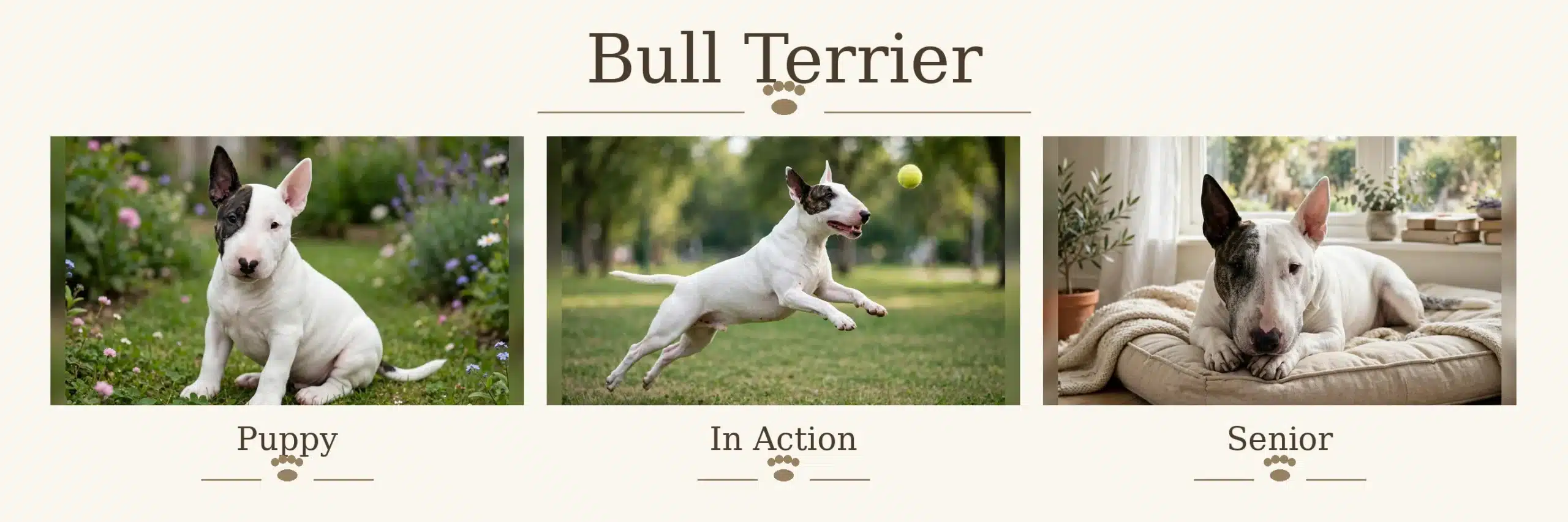
History & Origin
The Bull Terrier originated in England during the 1800s, where it was developed by crossing bulldogs with various terrier breeds to create a strong, agile, and determined dog with both athletic ability and refined appearance. Early breeders sought to combine the courage and power of bulldogs with the speed, intelligence, and energy of terriers, resulting in a versatile and distinctive breed that eventually became known for its unique egg-shaped head and lively personality.

One of the most influential figures in the breed’s development was James Hinks, an English breeder who refined the Bull Terrier during the mid-19th century. Hinks focused on creating a more elegant and balanced dog suitable not only for work but also for companionship and exhibition. Through careful breeding, the Bull Terrier gradually developed into a stylish and muscular companion breed while retaining much of its courage, confidence, and athleticism.
Although the breed’s early history was connected to rough sports common during that era, responsible breeders later emphasized temperament, loyalty, and companionship rather than aggression. The Bull Terrier became admired for its playful nature, strong attachment to people, and clownish personality, helping it transition from its working roots into a beloved family companion.
The breed’s muscular build, powerful jaws, and energetic nature still reflect its original development as a strong and athletic working dog. Modern Bull Terriers retain many characteristics shaped by their heritage, including intelligence, determination, curiosity, and high energy levels. Beneath the breed’s unusual appearance and playful behavior remains a bold and highly people-oriented dog deeply connected to its history as both a resilient worker and devoted companion.
Breed Traits & Personality
The Bull Terrier is a medium-to-large terrier breed known for its muscular build, egg-shaped head, powerful body, and bold personality. Originally developed in England by combining bulldog and terrier bloodlines, the Bull Terrier was bred for strength, agility, determination, and companionship. Over time, the breed evolved into a distinctive companion and working dog recognized for both its unique appearance and energetic temperament.
This breed has a compact but heavily muscular frame with a broad chest, strong shoulders, solid bone structure, and powerful hindquarters that contribute to impressive strength and athletic ability. The Bull Terrier should appear balanced, agile, and tightly built rather than bulky or coarse. Its body structure supports quick movement, endurance, and physical confidence.
One of the breed’s most recognizable features is its distinctive egg-shaped head. The head curves smoothly downward from the top of the skull to the nose without a pronounced stop, creating one of the most unique head shapes in the canine world. The small triangular eyes are deeply set and contribute to the breed’s alert, mischievous, and determined expression.
The ears are naturally erect and carried close together on top of the head, enhancing the breed’s attentive appearance. The Bull Terrier’s powerful jaw and muscular neck further emphasize its strong physical structure.
The coat is short, flat, dense, and glossy, requiring relatively simple maintenance while highlighting the breed’s muscular physique. The Bull Terrier has two recognized coat varieties, White and Colored. Head markings are permitted in the White variety. The Colored variety includes brindle, red, fawn, and tricolor, with white markings permitted as long as color predominates.
The breed moves with smooth, confident, and powerful gait that reflects athleticism and muscular coordination. Bull Terriers should appear agile and energetic rather than stiff or exaggerated.
Overall, the Bull Terrier projects strength, confidence, athleticism, and unmistakable individuality beneath its muscular body and highly distinctive head structure.
For a broader comparison of how this breed’s size compares to others, see our Dog Size & Weight Guide.
Temperament & Personality
The Bull Terrier is known for being affectionate, energetic, playful, and highly people-oriented. This breed forms strong emotional bonds with its family and often thrives on companionship, interaction, and active involvement in household life.
With family members, Bull Terriers are usually loving, entertaining, and emotionally connected. Many individuals display clownish behavior, strong personality, and a playful sense of humor that make them especially memorable companions.
The breed is often highly energetic and enthusiastic, retaining youthful behavior well into adulthood. Bull Terriers typically enjoy games, interactive activities, and close social engagement with their owners throughout the day.
Despite their tough appearance, many Bull Terriers are emotionally sensitive and respond strongly to owner interaction and household atmosphere. They generally thrive with positive engagement, structure, and companionship.
The breed is naturally confident and bold but not usually timid or reserved. Properly socialized Bull Terriers are often friendly and outgoing with people, although their strong personality and physical energy can sometimes overwhelm inexperienced owners.
Because of their terrier heritage, Bull Terriers may display stubbornness, determination, and strong prey drive. Some individuals can also be physically exuberant and impulsive, especially during adolescence.
Early socialization is especially important to encourage stable behavior around unfamiliar people, dogs, and environments. Some Bull Terriers may display same-sex dog aggression or strong territorial behavior if insufficiently socialized or improperly managed.
The breed generally does not tolerate prolonged isolation well and may develop destructive behavior, hyperactivity, or frustration if bored or left alone too frequently without enough stimulation.
Bull Terriers often thrive best in homes where owners appreciate their energetic personality, strong emotional attachment, and sometimes mischievous sense of humor.
In the right environment, the Bull Terrier becomes an affectionate, entertaining, and deeply loyal companion with tremendous personality and emotional warmth.
For a broader overview of personality differences between breed groups, visit our Dog Breed Temperament Guide
Exercise & Training Needs
The Bull Terrier is an active and muscular breed that requires regular exercise and ongoing mental stimulation to remain healthy and emotionally balanced. Originally developed from athletic working and terrier bloodlines, the breed possesses excellent strength, endurance, and playful energy.
Daily exercise should include brisk walks, active play sessions, obedience work, and mentally engaging interaction. Many Bull Terriers enjoy fetch, agility, hiking, puzzle toys, tug games, scent activities, and interactive family play that challenge both body and mind.
Mental stimulation is especially important because the breed is intelligent and often highly curious. Puzzle toys, advanced obedience exercises, trick training, and varied routines help prevent boredom and channel the breed’s energy productively.
Training requires consistency, patience, and calm leadership. Bull Terriers are intelligent but can also be independent and stubborn at times. Positive reinforcement methods using praise, treats, encouragement, and engaging sessions generally produce the best results.
Harsh correction or forceful handling may create resistance, frustration, or defensive behavior. Bull Terriers usually respond best to owners who remain emotionally steady, structured, and mentally engaging during training.
Early socialization is extremely important because of the breed’s strength, confidence, and terrier instincts. Puppies should be carefully exposed to different people, sounds, environments, surfaces, animals, and controlled social experiences during development.
Because of their energy level and physical power, Bull Terriers generally do best with active owners who provide structure, supervision, and consistent engagement. Without enough exercise and stimulation, the breed may become destructive, overly excitable, or difficult to manage.
Bull Terriers are often highly people-oriented and generally thrive when included closely in daily activities and family interaction rather than isolated outdoors or ignored.
For owners who appreciate energetic, entertaining, and personality-filled companion dogs, the Bull Terrier can become an exceptionally rewarding and loyal family member.
Training a Bull Terrier is a negotiation with a cheerful comedian, and the right reward keeps him on your side of the table: Bonne et Filou (dog-breeds.net approved affiliate link) makes its dog treats in France from simple, quality ingredients — a high-value bribe for a dog who always thinks he has the better idea.
FROM THE DOG-BREEDS.NET SHOP · BELLYBANDS.NET Housebreaking Belly Bands for boy and girl dogs Marking, housebreaking, heat cycles, or a senior who leaks a little — a Bull Terrier claims every room in the house as his own, and our handmade, washable bands have been helping dog owners since 2003.
Learn more on our Dog Training Page.
Grooming Requirements
The Bull Terrier’s short smooth coat is relatively low-maintenance and easy to care for compared to many heavily coated breeds. The sleek coat naturally stays fairly clean and requires only routine maintenance to maintain healthy skin and coat condition.
Weekly brushing with a soft bristle brush, grooming mitt, or rubber curry brush is generally sufficient to remove loose hair, distribute natural oils, and maintain healthy coat shine. Although the coat is short, Bull Terriers do shed moderately throughout the year.
Bathing is generally needed only occasionally unless the dog becomes especially dirty. Overbathing may strip natural oils from the skin and potentially contribute to dryness or irritation.
Routine grooming should also include nail trimming, dental care, ear cleaning, and inspection of the skin for irritation or allergy-related issues. Some Bull Terriers, particularly white individuals, may be somewhat more prone to skin sensitivities or environmental allergies.
Because the coat is very short and fine, Bull Terriers may also be more sensitive to extreme cold weather and prolonged sun exposure compared to heavily coated breeds. White-coated dogs especially may require additional protection from intense sun exposure.
Owners should routinely inspect the skin for cuts, irritation, bumps, or signs of allergic reactions because the short coat makes skin issues more visible.
Maintaining healthy body weight through proper nutrition and regular exercise is especially important because the breed’s muscular structure places stress on joints and overall mobility if excess weight develops.
The Bull Terrier’s practical low-maintenance coat and manageable grooming requirements make routine care relatively simple while still supporting healthy skin condition and overall physical well-being.
With proper grooming and consistent care, the Bull Terrier maintains its sleek muscular appearance, healthy skin condition, and strong athletic vitality throughout its active life.
That short, smooth coat is easy care but sheds all year: a weekly once-over with a rubber grooming brush loosens the dead hair, and a grooming mitt picks it up while giving him the full-body rub he is convinced grooming was invented for. (dog-breeds.net approved affiliate link)
Learn more on our Dog Grooming Page.
Health Overview & Testing
The Bull Terrier is a muscular, energetic, and highly distinctive terrier breed known for its egg-shaped head, powerful build, playful personality, and strong loyalty to its family. Originally developed in England as a companion and sporting dog, the Bull Terrier is generally considered a tough and athletic breed, but like many medium-sized terriers and powerfully built dogs, it can still be prone to several inherited and structural health concerns. Understanding common Bull Terrier health problems and recommended breeder health testing can help puppy buyers make more informed decisions when selecting a healthy puppy. Because this breed combines strong musculature, high energy levels, a compact athletic build, and intense personality traits, maintaining healthy joints, hearing, cardiac wellness, skin condition, and overall body condition is especially important throughout the dog’s life.

Health issues sometimes seen in Bull Terriers may include hereditary nephritis (kidney disease), deafness, patellar luxation, heart disease, skin allergies, obsessive-compulsive behaviors, kidney failure, lethal acrodermatitis (LAD), and orthopedic strain. Some individuals may also develop compulsive tail chasing, skin irritation, or age-related arthritis later in life. Congenital deafness is more common in white Bull Terriers, though it can also occur in colored dogs. Ask for your puppy’s BAER hearing test report, which shows the result for each ear. While not every Bull Terrier will develop these conditions, understanding the breed’s health tendencies allows owners to make better long-term decisions regarding breeding, exercise, nutrition, training, and preventive veterinary care.
Health Testing & Responsible Breeding
Responsible Bull Terrier breeders should perform appropriate health screenings before breeding in order to reduce the likelihood of inherited conditions being passed to future generations. Many puppy buyers are encouraged to ask about health testing, but they are often unsure which evaluations are most important for this breed. In the Bull Terrier, careful attention to kidney health, hearing, cardiac wellness, orthopedic stability, and overall structural health is especially valuable.
Buyers should ask whether the sire and dam have completed BAER hearing testing, cardiac evaluations, patella evaluations, and kidney screening with a urine protein-to-creatinine ratio (UPC). The Bull Terrier Club of America recommends screening breeding dogs and advises that every puppy have a brainstem auditory evoked response (BAER) hearing test before going home, regardless of coat color. Responsible breeders may also discuss hereditary nephritis history, skin allergies, orthopedic longevity, compulsive behavior tendencies, and overall temperament stability within their bloodlines. Ask the breeder about DNA testing for lethal acrodermatitis (LAD), which the breed club lists among its recommended screenings.
Unlike some breeds that rely primarily on basic veterinary evaluations alone, Bull Terrier breeder health testing often includes important hearing and kidney screening because inherited deafness and kidney disease are significant long-term concerns within the breed. Responsible breeders should be willing to explain which tests were performed, why they matter for the breed, and how the results influence breeding decisions. Ethical breeders understand that preserving the Bull Terrier involves much more than maintaining appearance or personality — it also includes protecting healthy movement, stable temperament, hearing, organ health, and long-term wellness.
Before Bull Terrier puppies are placed into new homes, they should receive a complete veterinary wellness examination that evaluates the heart, hearing, joints, eyes, bite alignment, parasite status, overall structure, and general physical development. Because some hereditary conditions may affect puppies early in life, careful monitoring during growth and development is especially important. Puppies should also leave with age-appropriate vaccinations, deworming records, feeding guidance, and recommendations for safe socialization, training, and exercise during development.
A responsible Bull Terrier breeder should willingly provide documentation of completed health clearances and openly discuss inherited health concerns affecting the breed. Puppy buyers should be cautious of breeders who avoid health discussions, refuse to provide testing information, or claim their dogs are completely free of health problems. Ethical breeding focuses on reducing inherited risk through careful selection, health screening, pedigree knowledge, and lifelong breeder support rather than making unrealistic promises.
If you already share your life with a Bull Terrier, a dog DNA test can screen your own dog for a range of inherited health markers and estimate his ancestry. It does not replace the BAER hearing tests, kidney screening, and patella and heart evaluations responsible breeders rely on — it simply adds one more piece to the picture of your dog’s health.
Preventive Care & Long-Term Wellness
Maintaining healthy body condition and regular exercise is especially important for the Bull Terrier because this breed is naturally energetic, muscular, and physically powerful. Without sufficient physical activity and mental stimulation, some individuals may become destructive, hyperactive, stubborn, or difficult to manage. Regular exercise helps support cardiovascular fitness, muscle tone, joint stability, coordination, and emotional well-being throughout life.
Mental enrichment is equally important for long-term wellness in the Bull Terrier. Obedience training, interactive games, scent work, puzzle-solving activities, and structured play help provide healthy outlets for the breed’s intelligence and strong personality. Dogs lacking proper outlets for their energy and drive may develop compulsive behaviors or frustration-related habits.
The Bull Terrier’s short coat generally requires minimal grooming, but regular skin monitoring is important because some individuals may develop allergies, irritation, hot spots, or sensitivity to environmental triggers. Grooming sessions also provide an excellent opportunity to monitor for lumps, coat-quality changes, parasites, or developing health concerns.
Maintaining healthy weight is especially important because excess weight places unnecessary strain on the joints, spine, heart, and overall mobility. Although naturally muscular, Bull Terriers should remain lean and properly conditioned rather than overweight.
Routine veterinary examinations throughout adulthood and senior years remain important for monitoring kidney health, hearing, cardiac wellness, skin condition, mobility, and overall quality of life. Early detection of developing health concerns often allows for more successful long-term management and improved outcomes.
For routine, non-emergency questions between vet visits, Dutch Vet (dog-breeds.net approved affiliate link) connects you with licensed veterinarians online, so a worry at midnight does not have to wait until morning — or turn into an emergency trip.
Lifespan & Senior Bull Terrier Care
The Bull Terrier often lives approximately 11 to 14 years when responsibly bred and properly cared for. Senior Bull Terriers may gradually develop arthritis, reduced stamina, hearing decline, kidney disease, muscle loss, or decreased mobility as they age. Some older dogs may also become more prone to stiffness or chronic skin irritation during the senior years.
As Bull Terriers enter their senior years, many owners focus on maintaining moderate low-impact exercise, healthy weight management, joint support, supportive bedding, continued mental stimulation, and routine wellness monitoring. Because the breed often remains playful and emotionally connected throughout life, continued companionship and interaction remain especially important even during old age.
With attentive care, preventive veterinary support, responsible breeding, and a healthy lifestyle, many Bull Terriers continue to thrive as affectionate, entertaining, and highly devoted companions throughout their lives.
A senior Bull Terrier still throws his whole solid weight into everything — including sleep — and an orthopedic Bully Bed (dog-breeds.net approved affiliate link) gives those older joints thick, supportive cushioning built to hold up under a heavy, hard-sleeping dog.
Is This Breed Right for You?
The Bull Terrier is an energetic, playful, and highly loyal terrier breed known for its strong personality, muscular build, and affectionate bond with its family. Originally developed as a sporting and companion dog, the Bull Terrier thrives when given exercise, companionship, structure, and regular interaction.
While loving and entertaining, the Bull Terrier is not the ideal fit for every household. Here’s a quick overview to help you decide:
✔ Ideal for:
- Active owners who enjoy interactive and energetic dogs
- People able to provide structure, leadership, and ongoing training
- Families seeking a playful and loyal companion
- Homes willing to provide regular exercise and mental stimulation
- Owners familiar with strong-willed terrier personalities
❌ Not Ideal for:
- People unable to provide regular exercise and engagement
- Owners seeking a calm or highly obedient breed
- Homes unprepared for stubborn or intense terrier behaviors
- People unwilling to manage training and socialization carefully
- Homes where the dog will frequently be left alone for long periods
Finding a Responsible Breeder or Rescue
If you’re interested in bringing a dog of this breed into your home, consider adopting from a rescue organization or finding a reputable breeder.
Find a Reliable Rescue:
Read our page about how to adopt from a reliable dog rescue.
Find reliable rescues through our Dog Rescue Directory.
Find a Responsible Breeder:
Read our information page about buying a healthy puppy from a responsible breeder.
Find responsible breeders through our Dog Breeders Directory.
Puppy Considerations
Bull Terrier puppies are playful, curious, and highly energetic from an early age. Early socialization and positive reinforcement training are extremely important to help puppies develop confidence, emotional stability, and appropriate behavior.
Because these puppies mature into powerful and strong-willed adults, early structure and consistent leadership are especially important. Proper socialization during puppyhood helps reduce fearfulness, stubbornness, or reactive behavior later in life.
Puppies benefit from:
- Early socialization with people, dogs, sounds, and environments
- Positive reinforcement training and clear boundaries
- Daily exercise and mentally stimulating activities
- Structured routines and supervised interactive play
- Regular handling for grooming and veterinary care
Because Bull Terrier puppies are intelligent and physically energetic, early training and healthy outlets for their enthusiasm are important for helping them mature into balanced and manageable adults.
Living With a Bull Terrier
Living with a Bull Terrier is often rewarding for owners who appreciate playful, entertaining, and highly interactive dogs. These dogs generally form strong bonds with their families and often enjoy participating in nearly every aspect of daily life.
The Bull Terrier requires regular physical exercise and mental stimulation to remain healthy and emotionally balanced. Many enjoy obedience training, interactive games, scent work, hiking, and activities that challenge both mind and body.
This breed generally does best in homes where it receives companionship, structure, training, and regular engagement. Without enough interaction or exercise, boredom may lead to destructive behavior, hyperactivity, compulsive habits, or excessive vocalization.
Although affectionate and loving with family members, Bull Terriers may naturally be strong-willed or intense around unfamiliar dogs or situations. Early socialization and responsible ownership are important for helping the breed develop into a stable and well-mannered adult.
Feeding a balanced, high-quality diet and maintaining a healthy weight are important for supporting joint health, muscle condition, mobility, and overall wellness. Routine veterinary care, exercise, training, socialization, and companionship all contribute to helping the breed thrive.
A bored Bull Terrier invents his own entertainment, and it usually involves the furniture. A sturdy enrichment toy (dog-breeds.net approved affiliate link) gives that busy, determined mind a job to do — one that keeps his teeth and his imagination pointed at something that is not yours.
And that famous egg-shaped head was made to be looked at: Crown & Paw (dog-breeds.net approved affiliate link) turns your favorite photo of your Bull Terrier into a classic-style portrait — the clown of the dog world, presented like royalty.
Final Thoughts…
The Bull Terrier is an energetic, affectionate, and deeply loyal terrier breed that thrives with owners who appreciate active companionship and strong personality traits. Their playful spirit, devotion, and unmistakable appearance make them unforgettable companions in the right homes.
With proper exercise, preventive care, socialization, training, and companionship, the Bull Terrier can become a deeply rewarding and highly devoted lifelong companion.
Are you considering adding a Bull Terrier to your family?
Bull Terrier FAQs
How long do Bull Terriers live?
Bull Terriers typically have a lifespan of 12 to 13 years. With proper nutrition, routine veterinary care, and regular exercise, many live healthy, active lives. Maintaining a healthy weight and monitoring for breed-related health concerns are especially important.
What is the Bull Terrier temperament like?
Bull Terriers are known for being playful, energetic, and affectionate. They are people-oriented dogs with a strong sense of humor and often display a clownish personality. While loyal and loving with their families, they can be strong-willed and benefit from consistent guidance.
Are Bull Terriers good family dogs?
Bull Terriers can make good family dogs in homes that understand their energetic nature. They often do well with children when properly trained and supervised. Early socialization is important, as their strength and enthusiasm can be overwhelming for very young kids.
Do Bull Terriers shed a lot?
Bull Terriers are low to moderate shedders. Their short, smooth coat is easy to care for and typically only requires weekly brushing to remove loose hair and keep the coat healthy.
Are Bull Terriers easy to train?
Bull Terriers are intelligent but can be independent and stubborn, which may make training challenging for first-time owners. They respond best to positive reinforcement, consistency, and engaging training sessions. Early obedience training is strongly recommended.
Similar Breeds You Might Like
If you’re interested in the Bull Terrier, you may also enjoy learning about these similar muscular and terrier-type breeds:
-
Staffordshire Bull Terrier – A compact, strong terrier known for affection, confidence, and loyalty.
-
American Staffordshire Terrier – A muscular, people-focused breed valued for devotion and confidence.
-
Boxer – An energetic, playful companion breed sharing a friendly, people-oriented temperament.
Learn more about responsible dog ownership, dog health and daily care: